What do AI agents for recruiters and staffing agencies actually do?
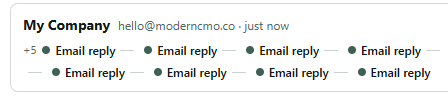
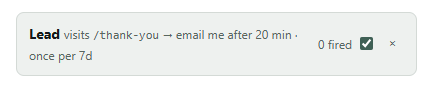
They contact the whole longlist and bring you the candidates worth talking to. One agent per desk works a list by email from your own mailbox, text from your own number and phone calls on Twilio, on a sequence you wrote with its own days, hours and conditions. It answers the candidate's questions from the job spec, asks the screening questions you wrote on the call or by text and keeps the transcript, offers real open slots from your calendar and books the screen, and hands you the candidates who pass. The same agent, or another, runs business development at employers and re-engagement at your database. It stops on each person the moment they reply, book or opt out.
Can it run a screening call?
Yes, on your own Twilio number, as a step in the sequence or when a candidate calls back. Write the screening questions into the call script: notice period, right to work, salary expectation, shift pattern, licence. The agent speaks in real time, using your provider's fastest model so it does not leave silences, asks the questions, answers the candidate's from your material, and brings the recording and transcript back to the inbox against that candidate. It asks what you told it to ask and does not improvise. Answering and dialling are separate switches, and the voice can be Google, Amazon Polly or ElevenLabs, or one you cloned on your own ElevenLabs or Fish Audio key.
Which channels can it reach candidates on?
Email, from as many mailboxes as you connect, each with warm-up and a health score. Text messages, on your own number through Twilio, Telnyx or one of seven other carriers. Phone calls, dialling and answering, on Twilio. Website chat, for the candidate who lands on your job page. And eleven DM platforms with your own app credentials: Bluesky, X, Reddit, WhatsApp, Telegram, Messenger, Instagram, LINE, Viber, Slack and Discord. Every handle seen for a candidate, an email address, a phone number, a social account id, is attached to one record, so the agent reads the whole history before it replies, whichever channel the reply arrives on.
Where does the candidate list come from?
Three places. A CSV export from your database, imported into a contact list. A segment pulled straight out of a connected CRM such as HubSpot or GoHighLevel. Or the Chrome side panel, which extracts email addresses, phone numbers and social profile links from whatever page you have open, follows the pages of a domain most likely to carry contact details, and works through a CSV of sites one at a time. The side panel signs in with the same account as the dashboard, so contacts, lists, templates and agents are shared, and you can draft and send a single email from it without creating a campaign.
Is the outreach compliant with opt-outs and calling hours?
It gives you the controls compliance needs. A campaign has a sending window with days, hours and time zone, set before anything sends. Every campaign email carries a one-click unsubscribe, the text step carries the Reply STOP line, and an opt-out on any channel ends the sequence on every channel and cancels what is queued. The agent replies once per thread, respects a daily cap per sender and hourly caps per mailbox and number, and ignores bounces, out-of-office replies and no-reply addresses. Every message and transcript is stored with timestamps. Whether your sequence meets the rules in the jurisdictions you recruit in remains your responsibility, as it would with a resourcer doing the same work.
Can it book the interview into my calendar?
Yes, and it books rather than sending a link. Connect Google Calendar, Microsoft 365, Calendly or Cal.com and the agent is given the slots that are genuinely free for the week ahead. It offers a few in the reply, checks that the candidate's choice was among those it offered, writes the appointment to the calendar and confirms it in the same thread. It cannot book a time that was not free, invent one, or cancel an appointment it was not shown. A booking on any channel ends the outreach sequence on all of them, and the booking is logged against the candidate so the consultant sees it before the call.
Can I run one agent per desk, or per client?
Either, and agents are unlimited on one account. Most agencies run one per desk, with that desk's mailboxes, number, job specs and funnel, and a separate one for business development. Some run one per client, so a consultant or the client can be invited in with their own login onto that agent alone: its inbox, its numbers and its analytics, with no sight of the other agents, your API keys, your settings or your billing. A knowledge base belongs to one agent, and content from one is never used to reply for another, so two clients in the same sector can sit on one account.
What do AI agents for recruiters and staffing agencies cost with five consultants?
The same as with one. The plan is $25 a month or $200 a year for the whole account, with a 14-day free trial, unlimited agents, unlimited contacts and lists, and no per-seat, per-agent, per-contact or per-message charge. The other costs are your carrier's, for texts and calls at their rates, and your AI provider's, on your own key with one of sixteen providers, billed at cost and usually a few dollars a month per agent. There is no percentage of a placement fee, and the Chrome side panel and the dashboard share the one login.