The first reminder goes out late
An invoice falls due, and the reminder waits until somebody runs the aged debtors report. By then the customer has forgotten what it was for, and the tone of the conversation has already changed.
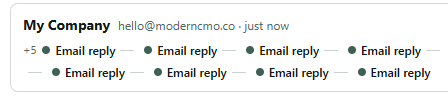
An agent that sends the reminder on day 1, the text on day 4 and places the call on day 8, answers "what is this for?" from your records, and stops the moment they pay, reply or ask it to. Inside the hours you set, with every message kept.
7-day free trial · $25 a month · Cancel anytime
The money is owed. The problem is that reminding people is boring, awkward, and easy to put off.
An invoice falls due, and the reminder waits until somebody runs the aged debtors report. By then the customer has forgotten what it was for, and the tone of the conversation has already changed.
One chase, maybe two, then the list goes quiet. The accounts that need a fifth and sixth touch, on the right day, on a different channel, are exactly the ones that never get it.
Email gets ignored. The phone call works, and it is the step everybody avoids, so the account that would have paid after a two-minute conversation sits for another month.
A promise to pay on Friday lives in one person's head. When the customer disputes it, there is no thread to point at.
You write the sequence and the rules once. The agent runs it on every account you give it, and stops on its own when there is a reason to.
An email on day 1, a text on day 4, a call on day 8, and on for as long as you set. Each step has its own delay and its own send condition, and nothing goes out on a day or at an hour you have not allowed.
It reads the connected CRM or store to see what is outstanding before it writes, answers "what was this for?" and "how do I pay?" from the material you gave it, and links only to the pages of your site you allowed.
A reply, a payment you mark, or an opt-out on any channel ends the sequence on every channel. Anything the customer raises that needs a person goes to your inbox, and the agent stands down on that thread.
The text step of a sequence carries the number it sends from, how many texts an hour that number may send, a sending window, and the Reply STOP line. A reply of STOP is honoured on every channel, and any reminder already queued to that person is cancelled.
Every message and every call transcript is stored against the contact, with the material the agent used to write it. When a customer says "nobody told me", the thread is there.

The parts of the product that matter most when the subject is money.
A schedule sets when anything may be sent, and the campaign shows the whole plan before it starts. It sends nothing until you press Start.
The instructions are yours: how firm, what to offer, when to fetch you. Every reply is generated from that and stored alongside it.
An old email address may be dead; the phone number usually is not. The call is placed on your own Twilio number, and the transcript is kept.
Reply yourself in the inbox and the agent stands down on that account. Hand it back when the arrangement is agreed.
The agent sends from your own mailbox and your own number, so the reminders come from you, not from a third-party domain your customers have never seen.
Connect the CRM or store that holds the invoices and it knows what is outstanding before it writes.
It gives you the controls compliance needs: a sending window with days, hours and time zone; an opt-out honoured on every channel, including on queued messages; one reply per thread and caps per sender; a full record of every message and call. What the agent says is what you instructed it to say. Whether that meets the rules where you operate, such as the FDCPA and Regulation F in the United States, is your call and your responsibility, exactly as it would be with a member of staff.
No. It can link to a payment page on your own site that you have allowed it to link to, and it can tell you when someone says they have paid. Marking an account settled is done by you, or by the connected store when the invoice closes.
From the systems you connect. It reads a connected CRM or store to see what is open on that contact before it replies. For anything else, the answer comes from the knowledge base you gave it: your documents, your Q&A pairs, your data points.
That is the kind of message you tell it to hand over. Write the rule in its instructions, and when a reply matches, the thread lands in your inbox and the agent stands down on that account until you hand it back.
Nothing. The plan is $25 a month or $200 a year for the whole account, with unlimited agents and contacts. You pay your carrier for texts and calls and your AI provider for the model, both at cost, and typically a few dollars a month.
One subscription, unlimited agents. Most accounts run several, one per job.
Load the overdue list, write the sequence, read the plan, press Start. Every account is chased, and every conversation is kept.
7-day free trial · Cancel anytime