Your AI marketing agent
answers DMs on eleven platforms.

An AI social media agent that answers the Instagram DM, the WhatsApp message and the Messenger enquiry from one knowledge base, inside each platform's reply window, asks for the booking or the email address, and shows you which platform actually produced the sale. Connected with your own app credentials, at $25 a month for every platform.

14-day free trial · No credit card · Cancel anytime

Every channel wired into one agent and out to the tools behind it: email, SMS, phone, Instagram, Messenger, WhatsApp, Telegram, LINE, Slack, Discord, X, Reddit, Bluesky, website chat, campaign sequences and follow-ups on one side; HubSpot, GoHighLevel, Housecall Pro, ServiceTitan, Jobber, Google Calendar, Microsoft 365, Calendly, HubSpot Meetings, Zoho Bookings, Acuity Scheduling, Cal.com, Square Appointments, Stripe, Shopify, WooCommerce, Wix and Squarespace on the other.

One agent, connected to every DM inbox you have

Messenger, Instagram, WhatsApp, Telegram, LINE, Viber, Slack, Discord, Bluesky, Reddit and X. Each is connected with your own app credentials, so the account, the rate limits and the relationship with the platform stay yours, and each is answered by the same agent from the same knowledge base. The customer who asks "do you ship to Ireland?" on Instagram gets the same answer as the one who asks on WhatsApp, because it is the same agent.

Replies go out inside each platform's own reply window, which matters on Messenger and Instagram, where a business can only answer a message for so long after it arrives. Auto-reply is a separate switch per platform, so you can put the agent on Instagram this afternoon and add Telegram when you are ready.

The agent's Social tab: Messenger, Instagram, WhatsApp, Telegram, LINE, Viber, Slack, Discord, Bluesky, Reddit and X as a grid of platform cards, each connected with your own app credentials.

It answers the question, then asks for the next step

A DM that asks the price is a lead, and the agent treats it as one. It answers from your documents, your Q&A pairs and your prices, links only to the pages of your site you allowed, and then does what a good marketer does: it asks. For a service business that means offering real open calendar slots and booking the one the customer picks. For a store it means the link to the product page and the email address for the follow-up.

The booking is real. The agent is only ever given slots that are genuinely free, and it can only take one it actually offered, so a DM at 11pm can end with an appointment in your Google Calendar, Calendly or Acuity and a confirmation in the same thread.

A website chat conversation in the Inbox: the visitor asks how much it is, the agent answers with the price and a link, the visitor's story is drawn across the top, and a reply box lets a person take the thread over.

Every platform, in one list, with a reply box

You do not open eleven apps. Every DM lands in the same inbox as your email, texts, calls and website chat, newest first, tagged with the platform it arrived on. Filter it to Instagram alone when you are working the launch, or to a single agent when you run several brands.

Reply in any thread yourself and the agent stands down on that conversation, so it never talks over you. Hand it back when you are done and it picks up where you left it. A rule in its instructions can send the ones you want to see first, such as a complaint, a refund or a partnership offer, straight to you.

The Inbox as one list: web chat, texts and calls together, a call marked no answer, a completed call that booked a roof inspection, texts confirming a Thursday appointment and asking the price, each row tagged with the channel it arrived on.

Attribution across every platform, per person

The handle from the DM, the email address the agent asked for and the phone number from the booking are merged into one contact, so the person who found you on Instagram, asked on WhatsApp and booked by email is one row with one history, not three strangers.

The dashboard counts people, not messages: how many the agent reached, how many replied, how many visited the site and how many converted, with the value won. A channel table shows where each person first made contact and which platform they were on when they bought, so the next campaign budget goes on the platform that actually sells.

The Bold Agent Kit dashboard: 157 people reached, 89 replied, 59 visited the site, 9 converted and $4,050 of value won over the last 30 days, with a breakdown by channel and by agent, and recent journeys underneath.

An AI social media agent for the DMs, not the posts

Most businesses treat social media as a publishing problem. Post the reel, schedule the carousel, check the likes. But the sale does not happen in the comments. It happens in the DM, when somebody who saw the post asks "how much?" or "do you have Saturday?", and it happens only if that DM is answered while they are still holding the phone. Across Instagram, Messenger, WhatsApp and the rest, that is a lot of inboxes to watch, and the message that arrives at 10pm on a Saturday is the one that goes unanswered until Monday, by which time they have bought from whoever answered first.

Bold Agent Kit gives you one agent that answers the DMs on all eleven platforms it supports: Messenger, Instagram, WhatsApp, Telegram, LINE, Viber, Slack, Discord, Bluesky, Reddit and X. You build it once, with your documents, your Q&A pairs, your prices and hours, and the pages of your site it may link to. Then it answers on every platform from that same material, inside each platform's reply window, and every reply is stored with the content it was generated from. It answers the question, handles the objection with the answer you wrote, and asks for the booking or the email address, because a DM that ends with "thanks" is not a lead.

It is a marketing agent, not a posting tool. It does not write your captions, schedule your content or reply to public comments. It works the private conversations, which is where the money is, and it works them the way a good salesperson would: it reads the connected CRM or store to see what the person has bought before it answers, it offers real calendar slots and books the one they choose, and it merges the Instagram handle, the email address and the phone number into one contact so nobody is pitched twice.

Every platform is connected with your own app credentials, and the model runs on your own API key with any of sixteen providers, so the accounts and the reputation stay yours. It costs $25 a month, or $200 a year, for the whole account: every platform, every agent, unlimited contacts. There is no per-conversation charge, no per-platform tier and no credit pack. The AI Instagram DM automation and the AI WhatsApp agent are the same agent at the same price, and adding the ninth platform costs nothing more than the first.

Eleven platforms, one agentMessenger, Instagram, WhatsApp, Telegram, LINE, Viber, Slack, Discord, Bluesky, Reddit, X.
Inside the reply windowAnswered while the platform still allows a reply, and while the customer is still there.
From one knowledge baseThe same answer on every platform, from the material you gave it, and nothing else.
Asks for the bookingReal open slots offered and written into your calendar, or an email address taken.
One person across platformsThe handle, the email address and the phone number are merged into one contact.
Attribution you can readWhich platform each person started on, and which one they bought on.

The sale is in the DMs, and the DMs are watched by nobody

The post did its job and somebody messaged. Four things go wrong from there, and none of them is the content.

01

Eleven inboxes, one phone

Instagram is on the founder's phone, Messenger is on the page nobody checks, WhatsApp is on the business mobile, and Telegram was set up for one campaign. Every platform is its own app with its own notifications, and the DM that matters is in the one nobody opened today.

02

The reply window closes

Messenger and Instagram only let a business answer a message for a limited time after it arrives. A DM that sits over the weekend is not just a cold lead. On some platforms it is one you can no longer reply to at all.

03

The DM ends with "thanks"

The question gets answered, eventually, and then nothing. Nobody asks for the booking, nobody asks for the email address, and the person who was ready to buy on Tuesday is a stranger again by Friday.

04

No idea which platform sold

The customer found you on Instagram, asked on WhatsApp and paid through the website. The ad report credits Instagram, the CRM credits the site, and the WhatsApp conversation that actually closed it is in nobody's numbers.

One agent. Eleven platforms. One knowledge base behind all of it.

You build the agent once. From then on it answers every DM platform you connect, on its own, and only fetches you for the conversations that need a person.

01 / Answers

On every platform, from the same material

Documents, Q&A pairs, prices, hours and the pages of your site it may link to, written once. The reply on Instagram and the reply on WhatsApp come from the same agent and say the same thing. Every reply is stored alongside the content it was generated from, so you can read back exactly why it said what it said.

02 / Asks

For the booking or the email address

After the answer comes the ask. It offers real open slots from your connected calendar and books the one the customer picks, or it asks for the email address so the conversation has somewhere to go when the DM goes quiet. It makes the offer you told it to make and handles the objection with the answer you wrote.

03 / Remembers

One person across every platform

The Instagram handle, the WhatsApp number, the email address and the browser cookie belonging to one person are merged into one contact. The agent reads the whole history before it replies, so nobody is asked the same question twice and nothing is pitched twice, and the analytics can tell you which platform the sale actually came from.

Your own credentials, each platform's own rules

Each platform is connected with your own app credentials: your Meta app for Messenger and Instagram, your WhatsApp Business account, your Telegram bot, your Slack and Discord apps, your Reddit, Bluesky and X applications. Nothing runs through a shared account, so the rate limits are yours and the platform's relationship is with you. Replies go out inside each platform's reply window, and the agent replies once per thread, respects a daily cap per sender and hourly caps per channel.

Every DM lands in the one inbox with your email, texts, calls and website chat, tagged with the platform. Reply yourself and the agent stands down on that thread; hand it back when you are finished. Auto-reply is a separate switch per platform, so the agent can be live on Instagram and silent on Discord until you decide otherwise.

The Inbox as one list: web chat, texts and calls together, a call marked no answer, a completed call that booked a roof inspection, texts confirming a Thursday appointment and asking the price, each row tagged with the channel it arrived on.

The four things that turn a DM into a customer

Each one answers a problem above, and each one runs without anybody opening an app.

Speed

Answered inside the window

A DM at 11pm on a Saturday is answered at 11pm on a Saturday, on the platform it arrived on, from your knowledge base, before the reply window closes and before the customer messages a competitor.

Consistency

The same answer on every platform

Price, shipping, hours, the objection about the competitor: one answer, written once, given identically on Instagram, WhatsApp, Telegram and the other eight.

Closing

Asks for the booking, and takes it

It offers real open slots and writes the appointment into your calendar, or it takes the email address, so the conversation has an outcome rather than an ending.

Attribution

Which platform produced the sale

One contact across every platform, one row per person, and a channel table that shows where they started and where they bought.

And you can see which platform is actually worth the effort

Every DM, reply, page visit, booking and sale is recorded against a person and reported as a funnel, per agent and across all agents. This is the part that tells you where the next hour of content should go.

The Bold Agent Kit dashboard: 157 people reached, 89 replied, 59 visited the site, 9 converted and $4,050 of value won over the last 30 days, with a breakdown by channel and by agent, and recent journeys underneath.

The funnel counts people rather than messages: how many the agent reached, how many replied, how many went on to visit your website, and how many converted, with the total value won and the median time from first DM to sale. Set a goal with a dollar value and a launch on Instagram reports what it earned, not how many messages it exchanged.

Below the funnel, a channel table shows where each person first made contact and which platform they were on when they converted, so you learn whether it is WhatsApp or Messenger that closes for your customers. One row per person shows every DM, email, visit, call and booking in order, months apart and across platforms. With a one-line snippet on your site, visit triggers close the loop: a known person who came from a DM and returns to the pricing page gets a follow-up after a delay, on the channel they last used.

A funnel of people, not messagesReached, replied, visited your site, converted, and the total value won.
Time from DM to saleThe median time from the first message to the purchase, so you know how long to wait.
Which platform closed itWhere each person first made contact, and the platform they were on when they bought.
The pages that precede a saleWhat the people who came from a DM read before they converted.
One row per personEvery DM, email, visit, call and booking for that contact, in order, across platforms.
Triggers on a return visitA known person lands on a page you named and is followed up on the channel they used.
Journey view

Every event for one person

Built from the cookie, email address and phone number attached to that contact, so activity months apart on different channels appears on one row.

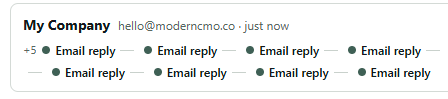
A journey row for one contact: their address, then every email reply in order along a single line, with earlier events folded up behind a +5.
Visit triggers

Follow up on a return visit

Page goals and visit triggers require a one-line snippet on your website. Conversations, bookings and manually marking a deal won work without it.

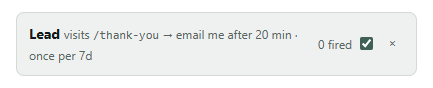
A saved visit trigger: when a lead visits /thank-you, email me after 20 minutes, once per 7 days, with a fired count and an on switch.

What social media DM automation normally takes, and what it takes here

Each of these is usually a separate tool, and most of them are priced per conversation, per contact or per platform. Here they are one plan.

The jobWhat it normally takesBold Agent Kit
Answering Instagram and Messenger DMs at any hourA Messenger chatbot builder, priced per contactIncluded
A WhatsApp agent that answers from your own materialA WhatsApp platform, priced per conversationIncluded, on your own WhatsApp account
Telegram, LINE, Viber, Slack, Discord, Reddit, Bluesky and XWatched by hand, or not at allIncluded, the same agent
Asking for the booking and writing it into the calendarA booking link in the bio, and hopingIncluded, the agent books it
One inbox for every platform, with a reply boxA social inbox tool, priced per seatIncluded
Knowing a DM and an email are the same personNobody knowsIncluded, merged into one contact
Knowing which platform produced the saleAttribution most businesses do not haveIncluded
The AI itselfMetered per message or per creditYour own key, billed by your provider at cost

Bold Agent Kit is $25 a month, or $200 a year, for the whole account: every platform, every agent, no per-conversation charge and no per-platform tier. The only other cost is your AI provider's usage, typically a few dollars a month, billed to you direct.

What people put an AI social media agent on

The same agent covers all of these. Many accounts run one per brand, one per client, or one per language.

It books your calendar, updates your CRM and knows what they bought

Connect the tools you already run and the agent works them like an assistant would: it takes appointments straight into your calendar, writes notes and outcomes back to the CRM, and reads your store to see what somebody has bought before it answers them.

Bookings are real, not guesses. It is only ever given slots that are genuinely free, and it can only take one it actually offered — so it cannot invent a time or double-book you. The same connection pulls a segment of past customers into a list when you want to run a campaign at them.

It books the slot itselfReal open times offered, and only a slot it actually offered can be booked.
Eighteen toolsHubSpot, GoHighLevel, Housecall Pro, ServiceTitan, Jobber, Stripe, Shopify and more.
It reads the customer firstWhat they bought, what is still open and what they are worth, before it replies.
Pull a segment into a listTake past customers straight out of the CRM and run a campaign at them.
Every action loggedBookings, cancellations and notes all recorded against that contact.

Eighteen CRMs, calendars and stores

  • HubSpot
  • GoHighLevel
  • Housecall Pro
  • ServiceTitan
  • Jobber
  • Google Calendar
  • Microsoft 365
  • Calendly
  • HubSpot Meetings
  • Zoho Bookings
  • Acuity
  • Cal.com
  • Square
  • Stripe
  • Shopify
  • WooCommerce
  • Wix
  • Squarespace

Powered by your own keys

Each agent uses a model on your own API key, in the same way it sends from your own mailbox and your own phone number. Sixteen providers are supported: OpenAI, Anthropic, Gemini, xAI and Mistral; DeepSeek, GLM, Kimi, Qwen and MiniMax; Groq, Together, Fireworks and OpenRouter; and Ollama or any other OpenAI-compatible endpoint you host yourself.

Bring your own credentials and you own the whole stack: your model provider, your mailboxes, your carrier, your CRM. We charge for the software and nothing else — no token markup, no metering, no credit packs — so your provider bills you direct at their rates, usually a few dollars a month per agent.

Your key, sixteen providersOpenAI, Anthropic, Gemini, xAI, Mistral, DeepSeek, Groq, OpenRouter and more.
Or a model you hostOllama, vLLM, or any other OpenAI-compatible endpoint of your own.
The fast model on callsIt switches automatically, because a phone call cannot wait for a sentence.
No metering from usNo markup, no credit packs, no per-message billing. A busy month costs no more.
Keys stored encryptedYour credentials are yours; we never send them anywhere but your provider.

Sixteen model providers, on your own key

  • OpenAI
  • Anthropic
  • Gemini
  • xAI
  • Mistral
  • DeepSeek
  • GLM
  • Kimi
  • Qwen
  • MiniMax
  • Groq
  • Together
  • Fireworks
  • OpenRouter
  • Ollama
  • Any OpenAI API

None of it matters if the email lands in spam

A new address sending forty cold emails a day gets filtered, and takes the domain with it. Mailboxes that opt into warm-up send each other ordinary mail on a ramp, starting at five a day. The receiving mailbox finds each message, moves it out of spam if it landed there, marks it read and replies to a share of them.

Each mailbox carries a health score out of 100 — SPF, DKIM and DMARC on the sending domain, seven days of real sends and bounces, and where its own warm-up mail is landing — with the reasons listed. A mailbox whose bounce rate or spam placement passes a threshold is pulled out of campaign rotation automatically, before it damages the domain.

Warm-up on a rampOpted-in mailboxes send each other ordinary mail, starting at five a day.
A health score out of 100SPF, DKIM and DMARC, seven days of real sends, and where the mail is landing.
A failing address rests itselfCross the bounce or spam threshold and it leaves campaign rotation on its own.
One-click unsubscribeHonoured automatically, including on messages already sitting in the queue.
Caps you cannot overshootOne reply per thread, a daily cap per sender, hourly caps per channel.

Live this afternoon, and silent until you switch it on

Three steps. Auto-reply is a separate switch per platform, so the agent answers nothing until you turn a platform on, and a follow-up campaign is a draft until you press Start.

Build the AI social media agent

Name it, choose a model and paste your API key. Then give it what it needs to answer a DM: your product or service pages, your prices and hours as data points, your Q&A pairs for the twenty questions you get every week, and the pages of your site it may link to, such as the booking page and the shipping page.

Write the instructions last: how it talks on a DM, which is shorter than email; what it offers; when it asks for the booking or the email address; and the situations in which it should fetch you. A complaint, a refund and a collaboration request are the usual three.

Model16 providers, on your own key
Documentscatalogue and price list, PDF or Word
Q&A pairsshipping, sizing, hours, parking
Data pointsprices, hours, lead times
Your pagesproduct and booking pages, linked verbatim
Instructionstone, offers, when to ask, when to hand over

Connect the platforms with your own credentials

Connect each platform with your own app credentials: the Meta app for Messenger and Instagram, the WhatsApp Business account, the Telegram bot token, the Slack and Discord apps, the Reddit, Bluesky and X applications. Start with the one where the DMs actually arrive and add the rest later.

Then add a calendar so it can book, a CRM or store so it knows what the person bought before it answers, and, if you want the follow-up to leave the platform, a mailbox and a number.

Platformseleven, each on your own app credentials
CalendarGoogle, Microsoft 365, Calendly, Acuity and more
Store or CRMShopify, WooCommerce, HubSpot, GoHighLevel and more
Mailboxapp password, or SMTP + IMAP, for the follow-up
Numberone of nine SMS carriers, for the follow-up
Websiteone line of script, for chat and visit triggers

Switch a platform on, then watch the inbox

Turn auto-reply on for the platform you want to start with. From that moment the agent answers genuine incoming DMs there, from the knowledge base, inside the reply window, once per thread, and every conversation lands in the inbox tagged with the platform.

When a DM has produced an email address or a phone number, the contact can go into a list and a campaign can follow up by email or text, inside the hours you set, with the whole plan shown before it starts. Reply in any thread yourself and the agent stands down.

Auto-replya switch per platform
Reply windowanswered inside each platform's own limit
Capsone reply per thread, daily and hourly limits
Takeoverreply yourself and it stands down
Follow-upemail or text campaign, a draft until started
Stop rulesreply, booking or opt-out

One account, unlimited agents

One account runs unlimited agents, one per client, and nothing is shared between them. A knowledge base belongs to a single agent, and content from one agent is never used to generate replies for another.

Invite a client by email address and they get their own login, which opens onto the one agent you gave them: its conversations, its numbers, its analytics and a reply box. They cannot see your other clients, your API keys, your settings or your billing. Access is deny-by-default.

One agent per clientUnlimited agents on one account, and nothing crosses between them.
They see one agent, not your accountTheir own login, onto the conversations, numbers and analytics you gave them.
Deny by defaultNo settings, no API keys, no billing, no sight of your other clients.
Reporting they can readThat agent has its own funnel, so the client sees what it actually produced.
$50 a year per referralOr $5 a month on the monthly plan — on every payment, for the life of the account, not just the first.

One plan. Everything in it. Monthly or yearly.

No seat tiers, no credit packs, no per-agent or per-channel pricing, and nothing held back behind an enterprise call.

Agents
How manyUnlimited — one per business, brand or job
Shared brainThe same identity, instructions and knowledge on every channel
Knowledge baseDocuments, Q&A pairs, data points and pages of your own site
IsolationOne agent's content is never used to reply for another
Client seatsInvite a client into one agent, with their own login
Channels
EmailAs many mailboxes per agent as you connect, rotated by campaigns
Text messagesNine providers — Twilio, Telnyx, SimpleTexting, Plivo, Vonage, Sinch, Bandwidth, MessageBird, ClickSend
Phone callsAnswering and dialling, with recordings and transcripts
TranscriptionGoogle, or Deepgram nova-3 on your own key
VoicesGoogle, Amazon Polly and ElevenLabs, or your own ElevenLabs / Fish Audio account
Voice cloningRecord a voice in the browser and clone it on your ElevenLabs or Fish Audio key
Website chatA widget on your site with your colour, image and greeting
Social DMsMessenger, Instagram, WhatsApp, Telegram, LINE, Viber, Slack, Discord, Bluesky, Reddit, X
Inbox
One listEvery channel's conversations together, newest first, tagged by channel
FiltersBy channel, by mailbox or number, or by agent
TakeoverReply yourself and the agent stands down on that thread
Hand backReturn the thread to the agent when you are done
Campaigns
Multichannel sequencesEmail, text and call steps in one campaign, each with its own timing
Send conditionsSend a step only if they opened, did not open, clicked or did not click
ScheduleThe days, hours and time zone anything may be sent
Stop rulesA reply, a booking or an opt-out on any channel ends the sequence
PacingPer-mailbox and per-number hourly limits, pausable and resumable
Review before startThe full plan is shown; a campaign sends nothing until you start it
TemplatesEmail, text and call scripts, saved once and reused
Analytics
FunnelReached, replied, visited, converted, plus value won and time to convert
By channelWhere each person started, and the channel they converted on
PagesWhich pages known people read, and how many of them converted
JourneysOne row per person: every message, visit, call and booking in order
GoalsA page rule or a manual "won", each with a dollar value
TriggersA known person returns to a page — notify you, or send a follow-up
Open and click trackingRecorded per campaign and added to that person's history
Integrations
CalendarsGoogle, Microsoft 365, Calendly, Cal.com, Acuity, Zoho, Square, HubSpot Meetings
CRMs and commerceHubSpot, GoHighLevel, Housecall Pro, ServiceTitan, Jobber, Stripe, Shopify, WooCommerce, Wix, Squarespace
BookingReal open slots offered, and only an offered slot can be booked
CRM importImport a segment of customers into a contact list
Deliverability and compliance
Mailbox warm-upRamped sending across the network, with spam rescue and replies
Health scoreSPF, DKIM, DMARC, bounce rate and inbox placement, with reasons
Auto-restA failing address is removed from rotation automatically
UnsubscribesOne click, honoured automatically, including on queued mail
Reply limitsOne reply per thread, per-sender daily and per-channel hourly caps
FilteringBounces, out-of-office and no-reply addresses ignored
List building
Contact extractionEmails, phone numbers and social profiles, on any site. Unlimited.
Deep scanFollows the pages of a domain most likely to carry contact details
Domain queueLoad a CSV of sites and work through them one at a time
Contacts and listsUnlimited, by email or phone, with CSV import and export
AI
Your own keySixteen providers, including any OpenAI-compatible endpoint you host
What we charge for AINothing — no markup, no metering, no credit packs
On callsUses your provider's fastest model automatically
Account
PlatformsChrome side panel and web dashboard on one login
Members' forumSix boards, visible only once you are signed in
Referral program$50 a year per referral ($5 a month), recurring for the life of the account
Supportsupport@boldagents.co
$25/ month
$200/ year

No credit card to start. Billed monthly. No add-ons, no seat tiers. Cancel anytime.

No credit card to start. $16.67 a month, billed once a year. No add-ons, no seat tiers. Cancel anytime.

Start 14-day free trial Start 14-day free trial

Before you sign up

Which platforms does the AI social media agent answer on?

Eleven: Messenger, Instagram, WhatsApp, Telegram, LINE, Viber, Slack, Discord, Bluesky, Reddit and X. Each is connected with your own app credentials and answered by the same agent from the same knowledge base, and auto-reply is a separate switch per platform, so you can start with one and add the others when you are ready. TikTok and LinkedIn are not supported. Alongside the DM platforms, the same agent can work email, text messages, phone calls and website chat, and every conversation from all of them lands in the one inbox, tagged with where it came from.

Does it post content or reply to comments?

No. It answers private messages. It does not write captions, schedule posts, publish to your feed or reply to public comments, and it is not a replacement for whatever you use to plan content. It is the other half of social media, the half where somebody who saw the post messages to ask a question, and it works that half the way a salesperson would: it answers from your material, asks for the booking or the email address, and records the outcome against the person. If the public comments are where your questions arrive, the agent cannot see them; if they arrive in the DMs, it can.

How is this different from a Messenger chatbot?

A chatbot builder gives you a flow: press 1 for prices, press 2 for hours, and a dead end whenever the customer types something you did not anticipate. This agent answers from a knowledge base, your documents, Q&A pairs, prices and pages, so it handles the question as it was asked, and it says only what that material supports. It is the same agent on all eleven platforms rather than a separate bot per platform, it books real calendar slots rather than sending a link, and it is priced per account, not per contact or per conversation. If you are looking for a Messenger chatbot alternative that also covers WhatsApp, Instagram and Telegram, that is the difference.

Can it book appointments from a DM?

Yes. Connect Google Calendar, Microsoft 365, Calendly, Cal.com, Acuity, Zoho Bookings, Square Appointments or HubSpot Meetings and the agent is given your real open slots for the week ahead. It offers a few in the DM, and when the customer picks one, that choice is checked against the slots it offered, written to your calendar, and confirmed in the same thread. It cannot book a time that was not free and it cannot cancel an appointment it was not shown. For a store rather than a service, it asks for the email address instead, and links only to the product pages you allowed.

What does "inside the reply window" mean?

Some platforms, Messenger and Instagram in particular, only allow a business to reply to a message for a limited time after the customer sent it. Once that window has passed, the conversation cannot be reopened from your side. The agent replies within that window, because it answers when the message arrives rather than when somebody opens the app, so a DM on a Saturday night is not a conversation you have lost by Monday. It also replies once per thread and respects a daily cap per sender and hourly caps per platform, so it never floods anyone and never talks over you.

How does it know an Instagram DM and an email are the same person?

Every handle seen for a contact, whether the Instagram account id, the WhatsApp number, the email address the agent asked for or the browser cookie from your site, is attached to one record. When a new handle turns out to belong to an existing contact, the two records are merged and the history moves across. That one record is what the agent reads before it replies, so nobody is asked the same question twice, and it is what the journey view and the channel table are built from, so the sale is credited to the platform it actually came from rather than the last one it touched.

Do I need a WhatsApp Business account or a Meta developer app?

Yes, for those platforms, because every platform is connected with your own credentials rather than a shared account. Messenger and Instagram connect through your own Meta app, WhatsApp through your WhatsApp Business account, Telegram through a bot token, and Slack, Discord, Reddit, Bluesky and X through applications you create on each. That is deliberate: the account, the rate limits and the platform's relationship stay with you, and if you ever leave, nothing of yours is tangled up in ours. If you would rather somebody did the setup for you, the hire page is for exactly that.

What does an AI social media agent cost with several platforms connected?

The same as with one. The plan is $25 a month or $200 a year for the whole account, with a 14-day free trial, and it covers every platform, every agent and unlimited contacts. There is no per-conversation charge, no per-platform tier and no credit pack. The model runs on your own API key with any of sixteen providers, billed to you by that provider at cost, usually a few dollars a month for a busy agent on a small model. An agent on Instagram alone costs the same as one on all eleven, and a launch week costs no more from us than a quiet one.

The same agent, on other jobs

One subscription, unlimited agents. Most accounts run several, one per job.

The next DM arrives tonight.

Connect one platform, load the knowledge base, switch auto-reply on. See how it handles the DMs that come in while you are asleep, and which platform they came from.

14-day free trial · No credit card · Cancel anytime