Bold Agent Kit vs Zapier
Lead response, already built.

Bold Agent Kit vs Zapier comes down to built or assembled. Zapier connects thousands of apps into Zaps and agents that you design, and bills them by tasks and activities. Bold Agent Kit is the lead-response system already put together: one AI agent that answers chat, texts, calls, email and social DMs from one knowledge base, books the appointment and follows up, for $25 a month.

7-day free trial · Cancel anytime

Every channel wired into one agent and out to the tools behind it: email, SMS, phone, Instagram, Messenger, WhatsApp, Telegram, LINE, Slack, Discord, X, Reddit, Bluesky, website chat, campaign sequences and follow-ups on one side; HubSpot, GoHighLevel, Housecall Pro, ServiceTitan, Jobber, Google Calendar, Microsoft 365, Calendly, HubSpot Meetings, Zoho Bookings, Acuity Scheduling, Cal.com, Square Appointments, Stripe, Shopify, WooCommerce, Wix and Squarespace on the other.

Fifteen channels on one agent, not a workflow per channel

Building lead response in Zapier starts with a trigger. Zapier describes a Zap as an automated workflow made of a trigger and one or more actions, so a new text is one trigger, a new form entry another and a new email a third, and each needs the steps that answer it. The channels themselves are apps you choose and connect, and the design that ties them together is yours to draw, test and keep up to date.

In Bold Agent Kit the channels are part of the agent. Email from any mailbox, texts through nine carriers, phone calls on Twilio, a website chat widget, and eleven DM platforms: Messenger, Instagram, WhatsApp, Telegram, LINE, Viber, Slack, Discord, Bluesky, Reddit and X, each connected with your own credentials. Switch auto-reply on for a channel and the same agent answers it, in the same voice, from the same material, with replies going out inside each platform's own reply window.

Adding a channel later is a connection and a switch, not a new workflow. The agent that answered the website chat on Monday answers the WhatsApp message on Tuesday exactly the same way, because nothing about its instructions or its knowledge changes when a channel is added.

The agent's Social tab: Messenger, Instagram, WhatsApp, Telegram, LINE, Viber, Slack, Discord, Bluesky, Reddit and X as a grid of platform cards, each connected with your own app credentials.

One knowledge base behind every reply

Zapier gives you more than one place to put knowledge. Zapier Chatbots take FAQs, documents and public links and can collect leads, and Zapier Agents take knowledge sources alongside their instructions, triggers and actions. Each is set up in its own product, with its own settings, and how the rest of your stack answers the same question is up to the workflows you build around them.

Bold Agent Kit has one knowledge base per agent, and every channel reads from it: your documents in PDF or Word, your answers to real questions as Q&A pairs, your prices, hours and lead times as data points, and the pages of your own site it may link to, verbatim. The price quoted in the website chat is the price quoted by text and on the phone, because it is the same agent reading the same material. Every reply is stored alongside the content it was generated from, so you can read back exactly why it said what it said.

The chat widget goes on your site with one line of script, in your colour, with your image and a greeting you wrote. It asks for an email address when the conversation is worth keeping, and that address ties the visitor to the call or the text that comes later.

A website chat conversation in the Inbox: the visitor asks how much it is, the agent answers with the price and a link, the visitor's story is drawn across the top, and a reply box lets a person take the thread over.

The appointment booked in the conversation, not configured as a step

On an automation platform, booking is an action you set up with whichever calendar app you connect, and the logic around it is the part you build: which slots to offer, what to do when the lead picks one, what happens when they go quiet halfway through. Zapier gives you the building blocks for that, with triggers, actions, paths for if/then branches and filters that decide what runs.

Bold Agent Kit books. Connect Google Calendar, Microsoft 365, Calendly, Cal.com, Acuity, Zoho Bookings, Square or HubSpot Meetings, and the agent is given the slots that are genuinely free for the week ahead. It offers a few, the lead picks one, the pick is checked against what was offered, and the appointment is written in and confirmed in the reply. It cannot book a time that was not free, and it cannot cancel an appointment it was not shown.

With HubSpot, GoHighLevel, Jobber, Housecall Pro or ServiceTitan connected, the agent reads who it is talking to before it answers, and the booking, the notes and the outcome are recorded against that contact. The confirmed call, the text about Thursday and the no-answer all sit in one inbox, tagged by channel.

The Inbox as one list: web chat, texts and calls together, a call marked no answer, a completed call that booked a roof inspection, texts confirming a Thursday appointment and asking the price, each row tagged with the channel it arrived on.

One flat price, against tasks and activities

Zapier bills its Zaps by tasks. In its own help centre a task is any successful action that runs, while triggers, filters, paths and built-in tools such as Formatter and Delay do not count. Zapier Agents are billed separately, by activities, where using a trigger, answering from a knowledge source, running an action or searching the web each counts as one, and using activities does not touch your task allowance. Plans come with a monthly allowance, and at the time of writing its published paid plans start at $19.99 a month, billed annually, for 750 tasks a month.

Bold Agent Kit is $25 a month or $200 a year for the whole account, with a 7-day free trial. Unlimited agents, every channel, unlimited contacts, and nothing counted per task, activity, credit, conversation or seat. The AI runs on your own key with one of sixteen providers, billed by them at cost with no markup from us, and texts and calls go through your own carrier at its rates. A busy month costs the same as a quiet one, and the dashboard shows what the month earned.

The Bold Agent Kit dashboard: 157 people reached, 89 replied, 59 visited the site, 9 converted and $4,050 of value won over the last 30 days, with a breakdown by channel and by agent, and recent journeys underneath.

How Bold Agent Kit and Zapier compare for lead response and follow-up

Zapier and Bold Agent Kit get weighed against each other for the same job, and they are built for very different ones. Zapier is an automation platform. Its homepage counts more than 9,000 apps it connects, and its products span Zaps, which are workflows of a trigger and one or more actions, Zapier Agents, which work from instructions, triggers, actions and knowledge sources, Chatbots, Forms, Tables and Canvas. People use it to move work between the tools a business already runs, and many use it to glue a lead-response system together: a chat widget, an SMS tool, a booking link, a CRM and an AI model, each an app, joined by Zaps.

Bold Agent Kit is that lead-response system, already joined. It is one AI agent that works email, text messages, phone calls, website chat and eleven social DM platforms from a single knowledge base. It answers a genuine enquiry in seconds on the channel it arrived on, offers real open slots from your calendar and books the one the lead picks, and follows up on a schedule until the lead replies, books or opts out. Every conversation lands in one inbox, and every person is one contact however many channels they use.

So the comparison is not about which tool automates more. Zapier automates far more, across thousands of apps and many kinds of internal work that Bold Agent Kit does not touch. The question is narrower. For the specific job of answering leads and following them up, do you want to design and maintain that system from parts, choosing a tool for each channel and a Zap for each route, or do you want it assembled, with the channels, the knowledge base, the booking, the stop rules and the inbox already working together from the first day?

The pricing follows the same line. Zapier charges by use: Zaps by tasks and Agents by activities, each plan with a monthly allowance, and any other app in the stack keeps its own account. Bold Agent Kit is one flat price, $25 a month or $200 a year, with no tasks, activities, credits or seats to count. You bring your own AI key and your own carrier, and both bill you directly at cost. Plenty of businesses end up running both: Zapier for internal operations, Bold Agent Kit for the conversations with customers.

Assembled versus builtIn Zapier you design the lead-response system from Zaps and apps. Here it is one agent, already wired.
Fifteen channels, one agentEmail, texts, calls, website chat and eleven DM platforms, answered by the same agent in the same voice.
One knowledge baseDocuments, Q&A pairs, data points and your own pages behind every reply on every channel.
It books the slot itselfReal open times offered, and only a slot it actually offered can be written to your calendar.
Follow-up with stop rulesA reply, a booking or an opt-out on any channel ends the sequence on all of them.
A flat price, no usage meter$25 a month. No tasks, activities, credits or seats, and your own AI key at cost.

Four things that come with building lead response from parts

None of these is about Zapier itself. They are what comes with building a customer-facing lead-response system out of separate apps, on a platform that bills by use.

01

Several tools to choose, connect and pay for

A lead-response stack built on an automation platform usually means a chat widget, an SMS tool, a phone service, a booking tool, a CRM and an AI model, each chosen separately and each with its own account, settings and bill. Zapier makes some of the pieces itself, such as Chatbots and Forms, and connects the rest. The platform is the glue; choosing the parts and keeping track of what each one costs stays with you.

02

Usage-based billing on every step

Zapier counts a task for every successful action a Zap runs, and Zapier Agents count an activity for each trigger used, each answer from a knowledge source, each action and each web search, on a separate allowance. A lead-response system is busy by design: more leads means more steps, so the plan you need moves with the number of leads you get. At the task limit, new Zap runs are held until the billing cycle resets unless you upgrade or turn on pay-per-task.

03

A workflow somebody has to own

Every route is something you designed: the trigger for each channel, the filter that decides what gets answered, the path that branches on the answer, the step that books, the step that stops the follow-up when the lead replies. When a form field changes, a channel is added or an offer is updated, somebody edits the workflow. That is what flexibility asks for, and in a small team it is easily the job that waits until next week.

04

The conversation lives in several places

The text thread sits in the SMS tool, the chat in the chat tool, the email in the mailbox and the booking in the calendar. Making one person out of the chat visitor, the caller and the email address, and showing their whole history in one inbox with a way to step in and hand back, is something you would build and keep in step yourself. Without it, the lead who chatted on Tuesday and phoned on Thursday is two strangers.

One agent. Every channel. Already assembled.

Instead of a trigger per channel and a step per action, you build one agent once. It works every channel you connect, reads one knowledge base, books into your calendar, and stops on its own when it should.

01 / Answers

Every channel, from one brain

A genuine incoming message on any channel the agent is switched on for is answered from that agent's knowledge base: your documents, Q&A pairs, prices and hours, and the pages of your site it may link to. There is no per-channel workflow to design. The same agent, with the same instructions, answers the chat, the text, the call, the email and the DM, once per thread, inside daily and hourly caps, ignoring bounces, out-of-office replies and no-reply addresses.

02 / Books

A real slot, not a booking step

Connect one of eight calendars and the agent is given the slots that are genuinely free. It offers a few in the conversation, checks the lead's pick against what it offered, writes the appointment in and confirms it in the reply. With a CRM connected it reads who it is talking to before it answers, and writes the booking and notes back to that contact, so the record is complete without a separate step to keep it so.

03 / Follows up

Until they book, buy or opt out

Put the leads who went quiet on a campaign: an email on day 0, a text on day 2, a call on day 5, each step with its own delay and send condition. It is created as a draft, shows the whole plan before it sends, and stops the moment the lead replies, books or opts out on any channel. An unsubscribe is honoured automatically, including on messages already sitting in the queue.

One inbox and one contact, instead of five apps to check

This is the part that is hardest to assemble from parts. Every conversation the agent is having, on every channel, arrives in one inbox: website chat, texts, call recordings and transcripts, email and social DMs, newest first, each row tagged with the channel it came in on. Filter it to one channel, one number or one agent. Reply in any thread yourself and the agent stands down on that conversation, so it never talks over you; hand it back and it picks up where you left it.

Behind the inbox, every handle seen for a person, the browser cookie from the chat, the email address, the phone number and the social account id, is attached to one contact. When a new handle turns out to belong to someone the agent already knows, the records are merged and the history moves across. The agent reads that history before it replies, so the lead who chatted on Tuesday and phoned on Thursday is not asked to explain again, and nothing is pitched twice. In Bold Agent Kit none of that is a workflow you maintain. It is how the product works.

The Inbox as one list: web chat, texts and calls together, a call marked no answer, a completed call that booked a roof inspection, texts confirming a Thursday appointment and asking the price, each row tagged with the channel it arrived on.

What you get without designing a single workflow

Each one answers a problem above, and each one works from the day you switch a channel on.

Speed

Answered in seconds

An enquiry at 11pm is answered at 11pm on the channel it arrived on, whether it is a chat, a text, a DM, an email or a phone call. No trigger to wire up per channel.

Price

One bill that does not move

$25 a month or $200 a year for every agent and every channel. Your AI provider and your carrier bill you at cost. More leads do not mean a bigger plan.

Upkeep

Nothing to rewire

Add a channel by connecting it and switching auto-reply on. Change a price or an offer once in the knowledge base, and every channel uses it from the next reply.

Memory

One person, one history

The cookie, the email address, the phone number and the social account id become one contact, with one history the agent reads before it writes anything.

And the reporting comes with it

In a stack of connected apps, knowing which channel produced the sale is one more thing to build. Here every message, reply, page view, call, booking and sale is recorded against a person and reported as a funnel, per agent and across all agents.

The Bold Agent Kit dashboard: 157 people reached, 89 replied, 59 visited the site, 9 converted and $4,050 of value won over the last 30 days, with a breakdown by channel and by agent, and recent journeys underneath.

The funnel counts people rather than steps: how many leads the agent reached, how many replied, how many went on to visit your website, and how many converted, with the total value won and the median time from first contact to the sale. Set a goal with a dollar value, either a page rule or a manual "won", and the agent reports what it earned rather than how much it ran.

Below the funnel, a channel table shows where each person first made contact and which channel they were on when they converted, and a pages table shows what known people read before they bought. One row per person shows the whole journey in order, months apart and across channels. A visit trigger closes the loop: when a known lead returns to a page you named, the agent tells you or follows up after a delay you set, on the channel they last used. Page goals and visit triggers need a one-line snippet on your site; conversations, bookings and a manual "won" work without it.

A funnel of people, not tasksReached, replied, visited your site, converted, and the total value won.
Time to convertThe median time from the first enquiry to the sale, so you know how long follow-up should run.
Which channel closed itWhere each lead first made contact, and the channel they were on when they booked.
The pages before a bookingWhat the leads you already know read before they converted.
One row per personEvery chat, text, call, email, DM, visit and booking for that contact, in order.
Triggers on a return visitThey come back to the pricing page, and the agent follows up on the channel they last used.
Journey view

Every event for one person

Built from the cookie, email address and phone number attached to that contact, so activity months apart on different channels appears on one row.

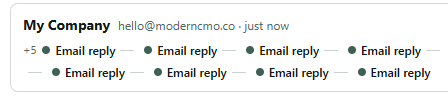
A journey row for one contact: their address, then every email reply in order along a single line, with earlier events folded up behind a +5.
Visit triggers

Follow up on a return visit

Page goals and visit triggers require a one-line snippet on your website. Conversations, bookings and manually marking a deal won work without it.

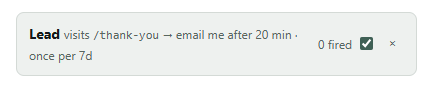
A saved visit trigger: when a lead visits /thank-you, email me after 20 minutes, once per 7 days, with a fired count and an on switch.

Bold Agent Kit vs Zapier, side by side

The middle column is how Zapier handles each part of lead response, as its own website and help centre describe it. Zapier covers far more than this list; these are the jobs a lead-response system has to do.

The jobZapierBold Agent Kit
What it isAn automation platform: Zaps of a trigger and one or more actions across 9,000+ apps, plus Agents, Chatbots, Forms and TablesOne AI agent for customer conversations, already built, on fifteen channels
Answering a website chatZapier Chatbots, given FAQs, docs and public links, with lead collection, on their own pricingIncluded: a one-line widget, answered by the same agent as every other channel
Texts and phone callsAn SMS or voice app you choose, connected by a Zap, where each successful action counts a taskIncluded, on your own number: nine SMS carriers, and Twilio for real-time calls
One inbox, one contact per personAssembled by you from the apps you connectIncluded: fifteen channels in one list, every handle merged into one contact
Booking the appointmentAn action you configure with the calendar app you connectIncluded: real open slots offered, the pick checked and written in
Following up the lead who went quietBuilt from triggers, Delay steps, filters and actions; Delay does not count as a task, the actions doA multichannel campaign that stops on a reply, booking or opt-out anywhere
How it chargesZaps by tasks, Agents by activities, separately; at the time of writing, paid plans start at $19.99 a month billed annually, for 750 tasks$25 a month or $200 a year for the whole account; no tasks, activities or credits
SeatsOne seat on Free and Professional, 25 users on Team, unlimited on EnterpriseNo seat charge; invite a client into their own agent with their own login

Zapier is a general automation platform, and for connecting a business's apps and automating internal work it covers ground Bold Agent Kit does not attempt. For customer conversations specifically, Zapier gives you the parts and the platform to join them, billed by tasks for Zaps and by activities for Agents; Bold Agent Kit gives you the joined system, at $25 a month or $200 a year for the whole account, with your AI provider and your carrier billing you directly at cost. Plans and allowances change, so check Zapier's pricing page for the current detail.

We checked Zapier’s public website on 11 September 2026 for this comparison. Plans and features change, so check zapier.com for the current detail. Zapier is a trademark of its owner, and Bold Agent Kit is not affiliated with or endorsed by it.

Switching, running both, or staying with Zapier

Three honest situations. Most teams comparing the two end up in one of them.

If the job is automating work across many apps, Zapier is the better fit, and Bold Agent Kit is not trying to be. Moving data between thousands of apps, building internal workflows with branching logic, running AI agents on back-office tasks, building forms and tables, mapping processes on a canvas: that is Zapier's ground. Bold Agent Kit does one job, customer conversations and follow-up, and it does not automate the rest of a business.

It books your calendar, updates your CRM and knows what they bought

Connect the tools you already run and the agent works them like an assistant would: it takes appointments straight into your calendar, writes notes and outcomes back to the CRM, and reads your store to see what somebody has bought before it answers them.

Bookings are real, not guesses. It is only ever given slots that are genuinely free, and it can only take one it actually offered — so it cannot invent a time or double-book you. The same connection pulls a segment of past customers into a list when you want to run a campaign at them.

It books the slot itselfReal open times offered, and only a slot it actually offered can be booked.
Eighteen toolsHubSpot, GoHighLevel, Housecall Pro, ServiceTitan, Jobber, Stripe, Shopify and more.
It reads the customer firstWhat they bought, what is still open and what they are worth, before it replies.
Pull a segment into a listTake past customers straight out of the CRM and run a campaign at them.
Every action loggedBookings, cancellations and notes all recorded against that contact.

Eighteen CRMs, calendars and stores

  • HubSpot
  • GoHighLevel
  • Housecall Pro
  • ServiceTitan
  • Jobber
  • Google Calendar
  • Microsoft 365
  • Calendly
  • HubSpot Meetings
  • Zoho Bookings
  • Acuity
  • Cal.com
  • Square
  • Stripe
  • Shopify
  • WooCommerce
  • Wix
  • Squarespace

Powered by your own keys

Each agent uses a model on your own API key, in the same way it sends from your own mailbox and your own phone number. Sixteen providers are supported: OpenAI, Anthropic, Gemini, xAI and Mistral; DeepSeek, GLM, Kimi, Qwen and MiniMax; Groq, Together, Fireworks and OpenRouter; and Ollama or any other OpenAI-compatible endpoint you host yourself.

Bring your own credentials and you own the whole stack: your model provider, your mailboxes, your carrier, your CRM. We charge for the software and nothing else — no token markup, no metering, no credit packs — so your provider bills you direct at their rates, usually a few dollars a month per agent.

Your key, sixteen providersOpenAI, Anthropic, Gemini, xAI, Mistral, DeepSeek, Groq, OpenRouter and more.
Or a model you hostOllama, vLLM, or any other OpenAI-compatible endpoint of your own.
The fast model on callsIt switches automatically, because a phone call cannot wait for a sentence.
No metering from usNo markup, no credit packs, no per-message billing. A busy month costs no more.
Keys stored encryptedYour credentials are yours; we never send them anywhere but your provider.

Sixteen model providers, on your own key

  • OpenAI
  • Anthropic
  • Gemini
  • xAI
  • Mistral
  • DeepSeek
  • GLM
  • Kimi
  • Qwen
  • MiniMax
  • Groq
  • Together
  • Fireworks
  • OpenRouter
  • Ollama
  • Any OpenAI API

None of it matters if the email lands in spam

A new address sending forty cold emails a day gets filtered, and takes the domain with it. Mailboxes that opt into warm-up send each other ordinary mail on a ramp, starting at five a day. The receiving mailbox finds each message, moves it out of spam if it landed there, marks it read and replies to a share of them.

Each mailbox carries a health score out of 100 — SPF, DKIM and DMARC on the sending domain, seven days of real sends and bounces, and where its own warm-up mail is landing — with the reasons listed. A mailbox whose bounce rate or spam placement passes a threshold is pulled out of campaign rotation automatically, before it damages the domain.

Warm-up on a rampOpted-in mailboxes send each other ordinary mail, starting at five a day.
A health score out of 100SPF, DKIM and DMARC, seven days of real sends, and where the mail is landing.
A failing address rests itselfCross the bounce or spam threshold and it leaves campaign rotation on its own.
One-click unsubscribeHonoured automatically, including on messages already sitting in the queue.
Caps you cannot overshootOne reply per thread, a daily cap per sender, hourly caps per channel.

Moving lead response off Zapier, in an afternoon

Three steps. Nothing is answered until you switch a channel on and no campaign sends until you press Start, so you can build next to your existing Zaps and turn them off when you are ready.

Turn your Zap prompts into an agent

Name the agent, choose a model and paste your API key from one of sixteen providers. Then take what your AI steps were being told and give it a permanent home: your service descriptions and brochures as documents, your prices, hours and lead times as data points, your answers to the questions and objections you hear as Q&A pairs, and the pages of your own site the agent may link to, verbatim.

Write the instructions last: how it should talk, which offer it may make, whether it should always ask for the booking, and the exact situations in which it should stop and fetch you. The filters and paths that used to decide which leads got which answer become a few plain rules in one set of instructions.

Model16 providers, on your own key
Documentsbrochure, service list, PDF or Word
Q&A pairswhat your AI steps used to answer
Data pointsprices, hours, lead times
Your pagesread, stored, linked verbatim
Instructionstone, offers, when to hand over

Connect the channels your Zaps were listening to

Most triggers in a lead-response Zap are a channel: a mailbox, a number, a chat, a DM. Connect those straight to the agent instead. The mailbox with an app password or as an SMTP and IMAP host, the number through one of nine SMS carriers, Twilio for calls, one line of script for the website chat, and your own app credentials for each DM platform.

Then connect the calendar it should book into and the CRM it should read before it answers, from HubSpot, GoHighLevel, Housecall Pro, ServiceTitan, Jobber and the rest. Bring your existing leads across as a CSV, or pull a segment straight out of the connected CRM into a list.

Mailboxapp password, or SMTP + IMAP
Numberone of nine SMS carriers
CallsTwilio, answering and dialling
Websiteone line of script
Socialeleven platforms, your own credentials
Calendar + CRM18 to choose from

Switch a channel on, then turn the old Zap off

Switch auto-reply on for one channel and watch the inbox. Every genuine incoming message is answered from the knowledge base, once per thread, inside daily and hourly caps, and bounces, out-of-office replies and no-reply addresses are ignored. When that channel is answering the way you want, switch on the next one, and turn off the Zap that used to handle it.

For the leads who went quiet, build a campaign across email, text and calls, set the days, hours and time zone it may send, and read the whole plan on the review screen before you press Start. It stops on a reply, a booking or an opt-out on any channel, and you can pause and resume it at any point.

Auto-replya separate switch per channel
Callsanswering and dialling switched separately
Capsone reply per thread, daily and hourly limits
Draft firsta campaign sends nothing until started
Stop rulesreply, booking or opt-out
Hand overthe conversations you named come to you

One account, unlimited agents

One account runs unlimited agents, one per client, and nothing is shared between them. A knowledge base belongs to a single agent, and content from one agent is never used to generate replies for another.

Invite a client by email address and they get their own login, which opens onto the one agent you gave them: its conversations, its numbers, its analytics and a reply box. They cannot see your other clients, your API keys, your settings or your billing. Access is deny-by-default.

One agent per clientUnlimited agents on one account, and nothing crosses between them.
They see one agent, not your accountTheir own login, onto the conversations, numbers and analytics you gave them.
Deny by defaultNo settings, no API keys, no billing, no sight of your other clients.
Reporting they can readThat agent has its own funnel, so the client sees what it actually produced.
$50 a year per referralOr $5 a month on the monthly plan — on every payment, for the life of the account, not just the first.

One plan. Everything in it. Monthly or yearly.

No seat tiers, no credit packs, no per-agent or per-channel pricing, and nothing held back behind an enterprise call.

Agents
How manyUnlimited — one per business, brand or job
Shared brainThe same identity, instructions and knowledge on every channel
Knowledge baseDocuments, Q&A pairs, data points and pages of your own site
IsolationOne agent's content is never used to reply for another
Client seatsInvite a client into one agent, with their own login
Channels
EmailAs many mailboxes per agent as you connect, rotated by campaigns
Text messagesNine providers — Twilio, Telnyx, SimpleTexting, Plivo, Vonage, Sinch, Bandwidth, MessageBird, ClickSend
Phone callsAnswering and dialling, with recordings and transcripts
TranscriptionGoogle, or Deepgram nova-3 on your own key
VoicesGoogle, Amazon Polly and ElevenLabs, or your own ElevenLabs / Fish Audio account
Voice cloningRecord a voice in the browser and clone it on your ElevenLabs or Fish Audio key
Website chatA widget on your site with your colour, image and greeting
Social DMsMessenger, Instagram, WhatsApp, Telegram, LINE, Viber, Slack, Discord, Bluesky, Reddit, X
Inbox
One listEvery channel's conversations together, newest first, tagged by channel
FiltersBy channel, by mailbox or number, or by agent
TakeoverReply yourself and the agent stands down on that thread
Hand backReturn the thread to the agent when you are done
Campaigns
Multichannel sequencesEmail, text and call steps in one campaign, each with its own timing
Send conditionsSend a step only if they opened, did not open, clicked or did not click
ScheduleThe days, hours and time zone anything may be sent
Stop rulesA reply, a booking or an opt-out on any channel ends the sequence
PacingPer-mailbox and per-number hourly limits, pausable and resumable
Review before startThe full plan is shown; a campaign sends nothing until you start it
TemplatesEmail, text and call scripts, saved once and reused
Analytics
FunnelReached, replied, visited, converted, plus value won and time to convert
By channelWhere each person started, and the channel they converted on
PagesWhich pages known people read, and how many of them converted
JourneysOne row per person: every message, visit, call and booking in order
GoalsA page rule or a manual "won", each with a dollar value
TriggersA known person returns to a page — notify you, or send a follow-up
Open and click trackingRecorded per campaign and added to that person's history
Integrations
CalendarsGoogle, Microsoft 365, Calendly, Cal.com, Acuity, Zoho, Square, HubSpot Meetings
CRMs and commerceHubSpot, GoHighLevel, Housecall Pro, ServiceTitan, Jobber, Stripe, Shopify, WooCommerce, Wix, Squarespace
BookingReal open slots offered, and only an offered slot can be booked
CRM importImport a segment of customers into a contact list
Deliverability and compliance
Mailbox warm-upRamped sending across the network, with spam rescue and replies
Health scoreSPF, DKIM, DMARC, bounce rate and inbox placement, with reasons
Auto-restA failing address is removed from rotation automatically
UnsubscribesOne click, honoured automatically, including on queued mail
Reply limitsOne reply per thread, per-sender daily and per-channel hourly caps
FilteringBounces, out-of-office and no-reply addresses ignored
List building
Contact extractionEmails, phone numbers and social profiles, on any site. Unlimited.
Deep scanFollows the pages of a domain most likely to carry contact details
Domain queueLoad a CSV of sites and work through them one at a time
Contacts and listsUnlimited, by email or phone, with CSV import and export
AI
Your own keySixteen providers, including any OpenAI-compatible endpoint you host
What we charge for AINothing — no markup, no metering, no credit packs
On callsUses your provider's fastest model automatically
Account
PlatformsChrome side panel and web dashboard on one login
Members' forumSix boards, visible only once you are signed in
Referral program$50 a year per referral ($5 a month), recurring for the life of the account
Supportsupport@boldagents.co
$25/ month
$200/ year

Billed monthly. No add-ons, no seat tiers. Cancel anytime.

$16.67 a month, billed once a year. No add-ons, no seat tiers. Cancel anytime.

Start 7-day free trial Start 7-day free trial

Before you sign up

Is Bold Agent Kit better than Zapier?

It depends on the buyer and the job. For a business, or an agency serving businesses, that wants every lead answered on chat, text, phone, email and social DMs, booked into a calendar and followed up, without designing and maintaining the workflow, Bold Agent Kit is the more direct fit: it is that system already built, at one flat price. For a team that wants to automate work across many apps, with internal processes, data moving between tools and agents on back-office tasks, Zapier is the better fit, and Bold Agent Kit does not try to compete there. You can also run both, for different jobs.

What is the difference between Bold Agent Kit and Zapier?

Scope and model. Zapier is a general automation platform: Zaps made of a trigger and one or more actions across thousands of apps, plus Agents, Chatbots, Forms and Tables, with Zaps billed by tasks and Agents by activities. Bold Agent Kit is one product for one job: an AI agent that answers customer conversations on fifteen channels from one knowledge base, books real calendar slots and follows up until the lead books, buys or opts out, for $25 a month. In Zapier you assemble a lead-response system from parts; in Bold Agent Kit it arrives assembled.

How does Zapier pricing compare with Bold Agent Kit pricing?

They are priced on different models. Zapier bills Zaps by tasks, where a task is any successful action, and bills Zapier Agents separately by activities, each plan with a monthly allowance. At the time of writing, its published paid plans start at $19.99 a month billed annually, or $29.99 billed monthly, for 750 tasks a month. Bold Agent Kit is $25 a month or $200 a year for the whole account, with unlimited agents and no tasks, activities, credits or seats. Your AI provider and your carrier bill you directly at cost. Check Zapier's pricing page for its current plans.

How do I move my lead response from Zapier to Bold Agent Kit?

Rebuild it rather than import it, because the two work differently. Take what your AI steps were told and put it into the agent's knowledge base as documents, Q&A pairs and data points, then write the instructions. Connect the mailbox, number, chat widget and DM accounts your Zaps were triggered by, then your calendar and CRM. Import your leads as a CSV or as a segment from a connected CRM. Switch one channel on, check the inbox, and turn off the matching Zap once you are happy with the answers. You can move one channel at a time.

Does Bold Agent Kit connect to Zapier?

No. Bold Agent Kit has no Zapier integration, and nothing passes between the two. It connects directly to the channels it works on, your mailboxes, nine SMS carriers, Twilio, the website widget and eleven DM platforms, and to eighteen CRMs, calendars and stores, including HubSpot, GoHighLevel, Jobber, ServiceTitan, Google Calendar, Calendly, Stripe and Shopify. If you use both, run them side by side for different jobs: Zapier for your internal operations, Bold Agent Kit for your customer conversations, each keeping its own records.

When is Zapier the better choice?

When the work you want automated is broader than customer conversations. If you need to move data between many apps, automate internal work across them, build forms and tables, map processes on a canvas, or run AI agents on back-office tasks, Zapier covers that and Bold Agent Kit does not. Zapier is also the better choice if you want to design every step of a workflow yourself, or connect tools that are not among Bold Agent Kit's eighteen integrations. If lead response is only one small part of what you need automated, Zapier may be the right home for the rest.

Can Zapier Agents or Zapier Chatbots answer my leads instead?

They can be part of a lead-response system. Zapier Chatbots take FAQs, documents and public links and can collect leads, and Zapier Agents work from instructions, triggers, actions and knowledge sources, with examples on Zapier's site that include qualifying leads and answering common support questions. What you would still assemble is the rest: the SMS and phone services, the booking logic, follow-up with stop rules across channels, one contact per person and one inbox for every thread. Each has its own pricing, too: Agents are billed by activities, and Chatbots are priced as their own product.

Which channels and tools does Bold Agent Kit cover on its own?

Fifteen channels: email from any mailbox; texts through Twilio, Telnyx, SimpleTexting, Plivo, Vonage, Sinch, Bandwidth, MessageBird or ClickSend; phone calls on Twilio; a website chat widget; and Messenger, Instagram, WhatsApp, Telegram, LINE, Viber, Slack, Discord, Bluesky, Reddit and X. It connects to eighteen tools: HubSpot, GoHighLevel, Housecall Pro, ServiceTitan, Jobber, Google Calendar, Microsoft 365, Calendly, HubSpot Meetings, Zoho Bookings, Acuity Scheduling, Cal.com, Square Appointments, Stripe, Shopify, WooCommerce, Wix and Squarespace. You hold the carrier and AI provider accounts; there is no chat vendor, SMS platform or booking tool to add on top.

Other comparisons

How Bold Agent Kit compares with the other tools people shortlist for the same job.

Your leads, answered without a single Zap.

Build one agent, connect one channel, and watch it answer, book and follow up from the same knowledge base, at one flat price. Keep Zapier for everything else it runs.

7-day free trial · Cancel anytime