AI agents for property managers
that answer tenants at any hour.

AI agents for property managers that answer "is the two-bed still available?" at 10pm and book the viewing into your calendar, tell a tenant how to report a leak and when the office is open from the policies you wrote, hand a maintenance request to a person with the whole transcript, and send the rent and renewal reminders you wrote on the days you set. Every contact kept, on one row per tenant.

7-day free trial · Cancel anytime

Every channel wired into one agent and out to the tools behind it: email, SMS, phone, Instagram, Messenger, WhatsApp, Telegram, LINE, Slack, Discord, X, Reddit, Bluesky, website chat, campaign sequences and follow-ups on one side; HubSpot, GoHighLevel, Housecall Pro, ServiceTitan, Jobber, Google Calendar, Microsoft 365, Calendly, HubSpot Meetings, Zoho Bookings, Acuity Scheduling, Cal.com, Square Appointments, Stripe, Shopify, WooCommerce, Wix and Squarespace on the other.

The unit enquiry answered, and the viewing booked, while they are still on the listing

A prospect who is looking for somewhere to live is looking at six listings tonight, and the first one to answer with availability, the rent, the deposit and a time to view is usually the one they visit. The enquiry arrives as an email from a listing site, a chat on your website, a text to the leasing number or a DM on Messenger. The same agent answers all of them in seconds, from the unit details and the Q&A you gave it, at any hour.

It works as an AI leasing agent for the first conversation: it answers the questions about rent, deposit, pets, parking, utilities and move-in dates from your material, asks the pre-qualifying questions you wrote, and offers real viewing slots from the calendar you connected, Google Calendar, Microsoft 365, Calendly, Cal.com or another. The slot the prospect picks is written into the calendar and confirmed on the channel they were on.

The chat widget is one line of script on your website, in your colour and with your greeting. It asks for an email address or a number when the conversation is worth keeping, so the prospect who chatted on Monday and emailed on Wednesday is one person with one history in your inbox, not two strangers.

A website chat conversation in the Inbox: the visitor asks how much it is, the agent answers with the price and a link, the visitor's story is drawn across the top, and a reply box lets a person take the thread over.

Hours, policies and how to report, answered; the leak handed to a person

Most of what tenants ask is the same twenty questions: when the office is open, how to report a repair, whether they can have a cat, where the bins go, what the notice period is, how to get a parking permit. Load your tenant handbook as a document and your answers as Q&A pairs, and the agent answers them on email, text, chat, the phone and social DMs, at any hour, in the words you wrote.

A maintenance request is the kind of message you tell it to hand over. Write the rule in its instructions, and when a tenant reports a leak, a broken boiler or a lock that will not turn, the thread lands in your inbox, or the maintenance coordinator's, with the full transcript, the unit and the tenant's history, and the agent stands down on that conversation. For an emergency, the out-of-hours number you stored as a data point is given straight away.

On the phone it works as a property management answering service on your own Twilio number: it answers in real time from the script you saved, answers what it can from your material, takes the details of what it cannot, and keeps the recording and transcript against the tenant.

The Inbox as one list: web chat, texts and calls together, a call marked no answer, a completed call that booked a roof inspection, texts confirming a Thursday appointment and asking the price, each row tagged with the channel it arrived on.

Rent reminder texts and renewal notices, written by you, sent on the day

Rent reminder texts go out on the days you set to the segment you chose, in the words you wrote. A campaign is a sequence of steps, each with its own channel and delay: an email three days before the due date, a text on the day, a follow-up text a week after for anyone who has not replied. Import the tenants from a CSV or pull a segment out of HubSpot or GoHighLevel, write the messages once, read the plan, and press Start.

The text step carries the number it sends from, the texts-per-hour pace for that number, the sending window with its days, hours and time zone, and the Reply STOP line. A reply of STOP is honoured on every channel at once, and anything already queued to that tenant is cancelled. A reply of "I paid yesterday" or "can I pay on the 15th?" is worked by the agent from your instructions or handed to you, and the sequence stops for that tenant.

The agent cannot take a payment. It links to the payment page on your own site that you allowed, and it tells you what the tenant said. Lease renewals run the same way: a sequence to the segment of tenants whose leases end in ninety days, with the renewal terms as a document, and a reply that says "yes" or "we are moving out" coming to you with the thread.

The text messages card in the campaign builder: which agent's number sends, texts per hour per number, a TCPA consent tick with the 9am to 8pm sending window and the Reply STOP line, and the opening text of the sequence.

Every contact with every tenant, owner and prospect, on one row

One row per person: the enquiry, the viewing, the move-in questions, the repair request, the reminder, the reply, the call. Every message the agent wrote is stored alongside the material it was generated from, so when a tenant says "nobody told me the office was closed" or an owner asks what was said to their tenant in March, the thread and its timestamps are there.

The dashboard counts people rather than messages: how many prospects the agent reached, how many replied, how many booked a viewing, how many converted to a lease if you set that as the goal with a value. A channel table shows where each prospect first made contact and the channel they were on when they booked, so you know whether the website chat or the listing-site email is filling your units.

Owners get answered too. Connect the owners@ mailbox to an agent with your management agreement and reporting schedule as its material, and "when is the statement sent?" and "has the unit been re-let?" are answered from what you gave it, with anything you named handed to you.

The Bold Agent Kit dashboard: 157 people reached, 89 replied, 59 visited the site, 9 converted and $4,050 of value won over the last 30 days, with a breakdown by channel and by agent, and recent journeys underneath.

AI agents for property managers, one per portfolio or per building

Property management is an answering job that never stops. Prospects enquire in the evening, tenants report repairs at the weekend, owners email on Monday morning wanting to know why the unit is still empty, and the same three people in the office are expected to answer all of it while showing units, chasing rent and dealing with the contractor who did not turn up. The enquiries that arrive after five are answered the next day, if they are answered at all, and the prospect has taken somewhere else by then.

Bold Agent Kit gives you AI agents for property managers that answer every one of those channels in seconds, from your own material. One agent, built once, works the leasing mailbox, the website chat, the office number and the social DMs. It answers prospects with availability, rent and deposit, asks the pre-qualifying questions you wrote, and books the viewing into your calendar. It answers tenants from your handbook and your policies. It hands the maintenance request, the complaint and anything else you named to a person, with the whole transcript. And it sends the rent and renewal reminders you wrote, to the segments you chose, on the days you set.

Everything it says comes from you. You give it the tenant handbook, the unit details, your fees and hours as data points, your answers to the questions you get every week, and the pages of your own site it may link to: the application page, the payment page, the maintenance form. You write the instructions: how it should talk, what it should never promise, and the exact situations in which it stops and fetches a person. Every reply is stored alongside the source it came from.

It is not a property management system, and it does not replace the one you have. It does not take rent, hold a deposit, sign a lease or dispatch a contractor. It answers, books, reminds and records, which is the part of the job that eats the office's day, and it hands everything else to the person whose job it is, with the context already gathered. Tenant enquiry automation, done properly, means the maintenance coordinator opens a thread that already says which unit, which fault, since when and whether the tenant is home on Thursday.

Run one agent per portfolio, one per building or one per owner, on one subscription. Each agent has its own mailbox, number, knowledge base, instructions and analytics, and nothing is shared between them, so the rules for the student block and the rules for the family homes never get mixed up. An owner or a site manager can be invited into their building's agent with their own login, and they see that building's conversations and nothing else.

It is $25 a month, or $200 a year, for the whole account: unlimited agents, unlimited tenants, unlimited contacts. You pay your carrier for the texts and calls and your AI provider for the model, both at cost and both a few dollars a month. There is no per-unit, per-door or per-message charge, and nothing is metered.

Prospects answered in secondsAvailability, rent, deposit and pets from the unit details, at 10pm as at 10am.
The viewing bookedReal open slots from your calendar, and only a slot it offered can be booked.
Tenants answered from your policiesThe handbook, the hours, the rules and how to report, in the words you wrote.
Maintenance handed to a personThe repair request lands with the coordinator, with the transcript and the history.
Reminders you wrote, on the dayRent and renewal sequences to a segment, inside the hours you set, with STOP honoured.
One agent per buildingUnlimited agents on one account. Separate rules, numbers and records for each.

The office cannot answer everything, so the wrong things wait

The units are good, the tenants are mostly reasonable and the owners are paying for a service. Four things get in the way, and none of them is anybody's fault.

01

The prospect enquires at night and hears back at noon

A listing-site enquiry arrives at 8:30pm. It is read at 9:15 the next morning, answered at noon after the viewings, and by then the prospect has seen two other units and put a holding deposit on one. The vacancy that costs the owner a month's rent was lost to a reply that came fourteen hours late.

02

Tenants ask the same twenty questions, one at a time

When is the office open, how do I report a repair, can I have a cat, where does the recycling go, what is my notice period. Each one takes a person three minutes to answer, and there are forty of them a day across email, text and the phone. That is the afternoon, gone, every day, on questions the handbook already answers.

03

The repair request goes to whoever picked up

A leak reported by text to the leasing number, a boiler reported by voicemail, a lock reported in an Instagram DM. Each lands with a different person, or nobody, and the maintenance coordinator finds out about the leak on Thursday, from the owner, who heard from the tenant.

04

The reminders go out late, or not at all

Rent reminders and renewal notices are the job that always moves to tomorrow. The tenant whose lease ends in sixty days has not been asked whether they are staying. The rent that is five days late has not been mentioned. Then there is a vacancy nobody planned for and an arrears conversation that is now awkward.

One agent per building. Every channel. Every tenant answered the same way.

You build the agent once from your handbook, your unit details and your policies. From then on it answers every channel you connect, books what can be booked, sends what you scheduled, and hands the rest to a person with the context already gathered.

01 / Answers

From your policies, not from memory

Prospects, tenants and owners are answered on the channel they used, at any hour, from the tenant handbook, the unit details, the Q&A pairs and the data points you gave the agent. It links only to the pages of your own site you allowed: the application, the payment page, the maintenance form. Nothing is invented, and a question it cannot answer from your material is handed to you.

02 / Books and hands over

The viewing into the calendar, the leak to a person

With a calendar connected, the agent offers real open viewing slots and writes the one the prospect picks into your diary. With a rule in its instructions, a maintenance request, a complaint or a notice to vacate goes to the person you named, with the full transcript and the tenant's history, and the agent stands down on that thread until it is handed back.

03 / Reminds

On a schedule, in your words, and stops when it should

Rent reminders and lease-renewal notices run as campaigns to a segment: email and text steps on the days you set, inside the hours and time zone you allowed, with the messages you wrote. A reply, a STOP or an opt-out on any channel ends the sequence for that tenant on every channel and cancels anything queued. Every send is recorded against the tenant.

The leasing mailbox for each building, connected as it is

Most portfolios already have a leasing@ address for each building or each owner, and a listing site that sends enquiries to it. Connect each one to its own agent, with an app password for Gmail or Outlook or as an SMTP and IMAP host for anything else, and the agent reads what arrives and replies from that same address. Mail is sent through your own server, not a shared relay, so the sending reputation stays on your domain and the prospect sees the address they wrote to.

An agent can hold as many mailboxes as you connect, and campaigns rotate between them. Each mailbox carries a health score out of 100, with SPF, DKIM and DMARC on the sending domain, seven days of real sends and bounces, and where its own warm-up mail is landing, so a renewal campaign to three hundred tenants does not go out from an address that has started landing in spam. A mailbox that crosses the bounce or spam threshold is pulled out of rotation on its own.

Every campaign email carries a one-click unsubscribe, honoured automatically, including on messages already queued. Anyone who uses it is added to a suppression list and skipped by every future send, and an opt-out on one channel stops the sequence on every channel. Replies are capped at one per thread, with a daily cap per sender and hourly caps per channel, so a tenant is never sent more than the plan says.

An agent's Email tab with three mailboxes connected, each showing a Good 90 health score, warm-up day and inbox placement, SPF, DKIM and DMARC checks, and an Active toggle.

The four things that actually keep units full and tenants answered

Each one answers a problem above, and each one runs without anybody in the office remembering to do it.

Speed

The prospect hears back first

The 8:30pm enquiry is answered at 8:30pm, with availability, rent, deposit and three viewing slots, on the channel it arrived on. The vacancy is filled by the manager who answered, and that is you.

Relief

The twenty questions, answered by the handbook

Hours, rules, how to report, notice periods, parking, pets. Answered in seconds from the material you wrote, on every channel, so the office's afternoon goes to the work that needs a person.

Routing

The leak reaches the right person, with the context

The maintenance request is handed over as a thread that already says which unit, which fault, since when and when the tenant is home, and the agent steps back until you hand it back.

Record

Proof of every contact

Timestamps, transcripts, recordings and the source of every reply, on one row per tenant, ready for the owner's question, the deposit dispute or the tribunal.

And you can see which channel is filling the units

Every enquiry, reply, viewing, reminder and call is recorded against a person and reported as a funnel, per agent and across the portfolio. This is the part that tells you which listing source, which channel and which reminder step actually produces a signed lease or a paid month.

The Bold Agent Kit dashboard: 157 people reached, 89 replied, 59 visited the site, 9 converted and $4,050 of value won over the last 30 days, with a breakdown by channel and by agent, and recent journeys underneath.

The funnel counts people rather than messages: how many prospects the agent reached, how many replied, how many went on to visit your listings on your own site, and how many converted, with the total value won and the median time it took. A conversion is what you define it to be. Set a goal for a booked viewing, or mark a signed lease as won with its annual rent as the value, and a leasing campaign reports what it filled, not how many emails it sent.

Below the funnel, a channel table shows where each person first made contact and which channel they were on when they converted, so you learn whether it is the website chat, the listing-site email or the text that gets your prospects to a viewing, and whether the rent reminder that works is the email three days before or the text on the day. One row per person shows the whole history in order: the enquiry, the viewing, the application, the move-in questions, the repair, the renewal.

With a one-line snippet on your website, page goals and visit triggers close the loop. When a known prospect comes back to a unit page after a viewing, or a tenant opens the payment page and leaves without paying, the agent can tell you, or send a follow-up after a delay you set, on the channel they last used.

A funnel of prospects, not messagesReached, replied, visited your listings, viewed or leased, and the value won.
Time to leaseThe median time from enquiry to a signed lease, so you know how long a vacancy really takes.
Which channel filled the unitWhere each prospect first made contact, and the channel they were on when they booked.
The reminder step that got paidWhich step of the rent sequence tenants replied to, by channel.
One row per tenantEvery enquiry, viewing, repair, reminder, reply and call for that person, in order.
The payment page, watchedA tenant opens it and leaves, and a follow-up goes out after a delay you set.
Journey view

Every event for one person

Built from the cookie, email address and phone number attached to that contact, so activity months apart on different channels appears on one row.

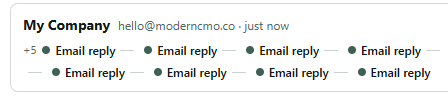
A journey row for one contact: their address, then every email reply in order along a single line, with earlier events folded up behind a +5.
Visit triggers

Follow up on a return visit

Page goals and visit triggers require a one-line snippet on your website. Conversations, bookings and manually marking a deal won work without it.

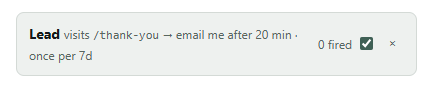
A saved visit trigger: when a lead visits /thank-you, email me after 20 minutes, once per 7 days, with a fired count and an on switch.

What answering a portfolio normally takes, and what it takes here

Each of these is usually a separate person, a separate service or a separate tool, and most of them are priced per door, per call, per conversation or per seat. Here they are one plan.

The jobWhat it normally takesBold Agent Kit
Answering prospect enquiries at night and at weekendsA leasing agent on call, or the enquiry waits until morningIncluded
Booking the viewing into the calendarA scheduling link, and a back-and-forth by emailIncluded, the agent books it
Answering tenant questions about hours, rules and how to reportThe office, three minutes at a time, forty times a dayIncluded, from your handbook
Routing the maintenance request to the right personWhoever picked up, and a sticky noteIncluded, with the transcript
Answering the office phoneA property management answering service, priced per call or per minuteIncluded, on your own number
Rent reminder texts and renewal notices on a scheduleA texting tool priced per door or per messageIncluded, you pay only your carrier
A record of every contact for the deposit disputeSent folders, voicemail and memoryIncluded, per tenant, with recordings
Separate agents for each building or ownerA per-property or per-unit priceIncluded, unlimited agents

Bold Agent Kit is $25 a month, or $200 a year, for the whole account: every agent, every channel, every building, every tenant, no per-door pricing. The only other costs are your carrier's, for texts and calls, and your AI provider's, typically a few dollars a month per agent.

What property managers put an agent on

The same agent covers all of these. Many accounts run one per building, one per owner, or one for leasing and one for the tenants they already have.

A manager filling vacancies. The agent answers the listing-site email, the website chat, the text and the DM in seconds, from the unit details and the Q&A you gave it: rent, deposit, availability, pets, parking, utilities, move-in date. It asks the pre-qualifying questions you wrote, offers real viewing slots from the calendar and books the one the prospect picks. Prospects who ask about a unit that has just let are offered the ones that have not. Anything about negotiating the rent, a guarantor or a special request comes to you with the thread.

A manager with a few hundred doors and three people in the office. The agent takes the tenant questions on every channel, answers the ones the handbook covers, and hands the repair requests, complaints and notices to vacate to the person you named with the whole thread. On the phone it works as an AI receptionist for property management, on your own number, so the tenant who calls at 7pm about a boiler gets the out-of-hours number and a logged request rather than voicemail.

The reminders. Import the tenants from a CSV or pull a segment out of HubSpot or GoHighLevel, write the rent reminder texts and the renewal notice in your own words, set the days and hours they may go out, read the plan, and press Start. The agent works the replies: "I paid yesterday" ends the sequence for that tenant, "can I pay on the 15th?" comes to you, and "we are moving out" lands in your inbox ninety days before the lease ends instead of thirty. The agent cannot take a payment; it links to the payment page on your own site and tells you what the tenant said.

It books your calendar, updates your CRM and knows what they bought

Connect the tools you already run and the agent works them like an assistant would: it takes appointments straight into your calendar, writes notes and outcomes back to the CRM, and reads your store to see what somebody has bought before it answers them.

Bookings are real, not guesses. It is only ever given slots that are genuinely free, and it can only take one it actually offered — so it cannot invent a time or double-book you. The same connection pulls a segment of past customers into a list when you want to run a campaign at them.

It books the slot itselfReal open times offered, and only a slot it actually offered can be booked.
Eighteen toolsHubSpot, GoHighLevel, Housecall Pro, ServiceTitan, Jobber, Stripe, Shopify and more.
It reads the customer firstWhat they bought, what is still open and what they are worth, before it replies.
Pull a segment into a listTake past customers straight out of the CRM and run a campaign at them.
Every action loggedBookings, cancellations and notes all recorded against that contact.

Eighteen CRMs, calendars and stores

  • HubSpot
  • GoHighLevel
  • Housecall Pro
  • ServiceTitan
  • Jobber
  • Google Calendar
  • Microsoft 365
  • Calendly
  • HubSpot Meetings
  • Zoho Bookings
  • Acuity
  • Cal.com
  • Square
  • Stripe
  • Shopify
  • WooCommerce
  • Wix
  • Squarespace

Powered by your own keys

Each agent uses a model on your own API key, in the same way it sends from your own mailbox and your own phone number. Sixteen providers are supported: OpenAI, Anthropic, Gemini, xAI and Mistral; DeepSeek, GLM, Kimi, Qwen and MiniMax; Groq, Together, Fireworks and OpenRouter; and Ollama or any other OpenAI-compatible endpoint you host yourself.

Bring your own credentials and you own the whole stack: your model provider, your mailboxes, your carrier, your CRM. We charge for the software and nothing else — no token markup, no metering, no credit packs — so your provider bills you direct at their rates, usually a few dollars a month per agent.

Your key, sixteen providersOpenAI, Anthropic, Gemini, xAI, Mistral, DeepSeek, Groq, OpenRouter and more.
Or a model you hostOllama, vLLM, or any other OpenAI-compatible endpoint of your own.
The fast model on callsIt switches automatically, because a phone call cannot wait for a sentence.
No metering from usNo markup, no credit packs, no per-message billing. A busy month costs no more.
Keys stored encryptedYour credentials are yours; we never send them anywhere but your provider.

Sixteen model providers, on your own key

  • OpenAI
  • Anthropic
  • Gemini
  • xAI
  • Mistral
  • DeepSeek
  • GLM
  • Kimi
  • Qwen
  • MiniMax
  • Groq
  • Together
  • Fireworks
  • OpenRouter
  • Ollama
  • Any OpenAI API

None of it matters if the email lands in spam

A new address sending forty cold emails a day gets filtered, and takes the domain with it. Mailboxes that opt into warm-up send each other ordinary mail on a ramp, starting at five a day. The receiving mailbox finds each message, moves it out of spam if it landed there, marks it read and replies to a share of them.

Each mailbox carries a health score out of 100 — SPF, DKIM and DMARC on the sending domain, seven days of real sends and bounces, and where its own warm-up mail is landing — with the reasons listed. A mailbox whose bounce rate or spam placement passes a threshold is pulled out of campaign rotation automatically, before it damages the domain.

Warm-up on a rampOpted-in mailboxes send each other ordinary mail, starting at five a day.
A health score out of 100SPF, DKIM and DMARC, seven days of real sends, and where the mail is landing.
A failing address rests itselfCross the bounce or spam threshold and it leaves campaign rotation on its own.
One-click unsubscribeHonoured automatically, including on messages already sitting in the queue.
Caps you cannot overshootOne reply per thread, a daily cap per sender, hourly caps per channel.

Live this afternoon, and nothing sends until you say so

Three steps. Inbound switches on when you connect a channel. A reminder campaign is created as a draft and shows you the whole plan, every tenant and every step, before it sends anything.

Build the agent from your handbook and your unit details

Name it, choose a model and paste your API key. Then give it what it needs to answer a prospect, a tenant or an owner: the tenant handbook and the management agreement as documents, the unit details, your Q&A pairs for the questions you get every week, your office hours, fees and out-of-hours number as data points, and the application, payment and maintenance pages of your own site it may link to.

Write the instructions last: how it should talk, what it must never promise, the pre-qualifying questions for prospects and the order to ask them, and the exact situations in which it should stop and fetch a person. A repair request, a complaint, a notice to vacate and anything about arrears are the usual four.

Model16 providers, on your own key
Documentstenant handbook, unit details, renewal terms
Q&A pairshours, rules, how to report, pets, parking
Data pointsfees, deposit, office hours, emergency number
Your pagesapplication, payment and maintenance pages
Instructionstone, never-promise list, when to hand over

Connect the leasing mailbox, the office number and the calendar

Add the leasing@ mailbox the listing sites send to, the office number for texts and calls, the chat snippet for your website, and the social accounts prospects actually message. Each one runs on your own account, so the replies come from you and the reputation stays yours.

Then connect the calendar so it can book viewings, and the CRM, HubSpot or GoHighLevel, so it reads what you already know about a contact before it answers and writes the outcome back. Import the tenant list as a CSV, or pull a segment straight out of the CRM into a list for the reminder campaigns.

Mailboxapp password, or SMTP + IMAP, one per building
Numberone of nine SMS carriers, Twilio for calls
Websiteone line of script, in your colour
SocialMessenger, WhatsApp, Instagram and eight more
CalendarGoogle, Microsoft 365, Calendly, Cal.com
TenantsCSV, or a segment from HubSpot or GoHighLevel

Switch inbound on, then schedule the reminders

Switch auto-reply on for each channel, and the agent starts answering what already arrives. For the reminders, build the sequence across email and text, set the days, hours and time zone it may contact anyone, and read the whole plan on the review screen: every tenant, every step, every date. Nothing leaves until you press Start.

Then watch the inbox. Prospect replies are worked by the agent and viewings appear in the calendar; repair requests and anything else you named land with the person you chose; reminder replies end the sequence or come to you. Pause a campaign at any point and resume it later.

Inboundauto-reply is a switch per channel
Draft firsta campaign sends nothing until started
Scheduledays, hours and time zone
Pacinghourly limits per mailbox and number
Stop rulesreply, booking, STOP or opt-out
Pauseresume any campaign at any point

One account, unlimited agents

One account runs unlimited agents, one per client, and nothing is shared between them. A knowledge base belongs to a single agent, and content from one agent is never used to generate replies for another.

Invite a client by email address and they get their own login, which opens onto the one agent you gave them: its conversations, its numbers, its analytics and a reply box. They cannot see your other clients, your API keys, your settings or your billing. Access is deny-by-default.

One agent per clientUnlimited agents on one account, and nothing crosses between them.
They see one agent, not your accountTheir own login, onto the conversations, numbers and analytics you gave them.
Deny by defaultNo settings, no API keys, no billing, no sight of your other clients.
Reporting they can readThat agent has its own funnel, so the client sees what it actually produced.
$50 a year per referralOr $5 a month on the monthly plan — on every payment, for the life of the account, not just the first.

One plan. Everything in it. Monthly or yearly.

No seat tiers, no credit packs, no per-agent or per-channel pricing, and nothing held back behind an enterprise call.

Agents
How manyUnlimited — one per business, brand or job
Shared brainThe same identity, instructions and knowledge on every channel
Knowledge baseDocuments, Q&A pairs, data points and pages of your own site
IsolationOne agent's content is never used to reply for another
Client seatsInvite a client into one agent, with their own login
Channels
EmailAs many mailboxes per agent as you connect, rotated by campaigns
Text messagesNine providers — Twilio, Telnyx, SimpleTexting, Plivo, Vonage, Sinch, Bandwidth, MessageBird, ClickSend
Phone callsAnswering and dialling, with recordings and transcripts
TranscriptionGoogle, or Deepgram nova-3 on your own key
VoicesGoogle, Amazon Polly and ElevenLabs, or your own ElevenLabs / Fish Audio account
Voice cloningRecord a voice in the browser and clone it on your ElevenLabs or Fish Audio key
Website chatA widget on your site with your colour, image and greeting
Social DMsMessenger, Instagram, WhatsApp, Telegram, LINE, Viber, Slack, Discord, Bluesky, Reddit, X
Inbox
One listEvery channel's conversations together, newest first, tagged by channel
FiltersBy channel, by mailbox or number, or by agent
TakeoverReply yourself and the agent stands down on that thread
Hand backReturn the thread to the agent when you are done
Campaigns
Multichannel sequencesEmail, text and call steps in one campaign, each with its own timing
Send conditionsSend a step only if they opened, did not open, clicked or did not click
ScheduleThe days, hours and time zone anything may be sent
Stop rulesA reply, a booking or an opt-out on any channel ends the sequence
PacingPer-mailbox and per-number hourly limits, pausable and resumable
Review before startThe full plan is shown; a campaign sends nothing until you start it
TemplatesEmail, text and call scripts, saved once and reused
Analytics
FunnelReached, replied, visited, converted, plus value won and time to convert
By channelWhere each person started, and the channel they converted on
PagesWhich pages known people read, and how many of them converted
JourneysOne row per person: every message, visit, call and booking in order
GoalsA page rule or a manual "won", each with a dollar value
TriggersA known person returns to a page — notify you, or send a follow-up
Open and click trackingRecorded per campaign and added to that person's history
Integrations
CalendarsGoogle, Microsoft 365, Calendly, Cal.com, Acuity, Zoho, Square, HubSpot Meetings
CRMs and commerceHubSpot, GoHighLevel, Housecall Pro, ServiceTitan, Jobber, Stripe, Shopify, WooCommerce, Wix, Squarespace
BookingReal open slots offered, and only an offered slot can be booked
CRM importImport a segment of customers into a contact list
Deliverability and compliance
Mailbox warm-upRamped sending across the network, with spam rescue and replies
Health scoreSPF, DKIM, DMARC, bounce rate and inbox placement, with reasons
Auto-restA failing address is removed from rotation automatically
UnsubscribesOne click, honoured automatically, including on queued mail
Reply limitsOne reply per thread, per-sender daily and per-channel hourly caps
FilteringBounces, out-of-office and no-reply addresses ignored
List building
Contact extractionEmails, phone numbers and social profiles, on any site. Unlimited.
Deep scanFollows the pages of a domain most likely to carry contact details
Domain queueLoad a CSV of sites and work through them one at a time
Contacts and listsUnlimited, by email or phone, with CSV import and export
AI
Your own keySixteen providers, including any OpenAI-compatible endpoint you host
What we charge for AINothing — no markup, no metering, no credit packs
On callsUses your provider's fastest model automatically
Account
PlatformsChrome side panel and web dashboard on one login
Members' forumSix boards, visible only once you are signed in
Referral program$50 a year per referral ($5 a month), recurring for the life of the account
Supportsupport@boldagents.co
$25/ month
$200/ year

Billed monthly. No add-ons, no seat tiers. Cancel anytime.

$16.67 a month, billed once a year. No add-ons, no seat tiers. Cancel anytime.

Start 7-day free trial Start 7-day free trial

Before you sign up

What do AI agents for property managers do when a prospect enquires about a unit?

The enquiry arrives as an email from a listing site, a chat on your website, a text or a social DM. With that channel connected, the agent answers in seconds from the unit details and the Q&A pairs you gave it: whether it is available, the rent, the deposit, pets, parking, utilities and the earliest move-in date. It asks the pre-qualifying questions you wrote, in the order you wrote them. Then it offers real viewing slots from the calendar you connected and books the one the prospect picks, confirming it on the same channel. If the prospect asks about negotiating the rent, a guarantor or anything else you named, the thread comes to you with the agent standing down.

Can it handle maintenance requests?

It takes them and hands them over; it does not dispatch a contractor. Write the rule in its instructions, and when a tenant reports a repair on any channel, the agent gathers what you told it to ask for, which unit, what the fault is, since when, whether the tenant is home, and lands the thread with the person you named, with the full transcript and the tenant's history, then stands down on that conversation until it is handed back. For emergencies, the out-of-hours number you stored as a data point is given the moment a tenant says leak, gas or no heating. The request is recorded against the tenant, with timestamps, so nobody later asks when it was first reported.

Can it send rent reminder texts, and can it take a payment?

It sends the reminders you write, to the segment you choose, on the days you set, and it cannot take a payment. A rent reminder campaign is a sequence of email and text steps: three days before, on the day, a week after. The text step carries your own number, the sending window with its days, hours and time zone, and the Reply STOP line. When a tenant replies, the sequence stops for that tenant; "I paid yesterday" is recorded and "can I pay on the 15th?" comes to you. The agent links to the payment page on your own site that you allowed, and nothing else. Marking the rent as paid is done by you, in your own system.

Can it answer the office phone as a property management answering service?

Yes, on your own Twilio number, with separate switches for answering and dialling. It answers in real time from the script you saved, using your provider's fastest model so it does not leave silences. A prospect who calls about a unit gets availability, the rent and a viewing booked into the calendar. A tenant who calls about the office hours or the parking rules gets the answer from your handbook. A tenant who calls about a repair has the details taken and the request handed to the person you named, with the recording and transcript. Anything the material does not cover, it says so and takes a message for you.

How does it know our policies, hours and rules for each building?

You give them to it, per agent. Upload the tenant handbook and the unit details as documents, add your answers to the questions you get every week as Q&A pairs, and store the office hours, fees, deposit and emergency number as data points. The agent answers only from that material and the pages of your own site you allowed, and each reply is stored alongside the content it was generated from. Because a knowledge base belongs to one agent, the rules for the student block and the rules for the family homes never mix: run one agent per building or per portfolio, and each one knows only its own policies.

Can I run one agent per building, or per owner, and let them see it?

Yes. Unlimited agents are included in the one plan, and each has its own mailbox, number, knowledge base, instructions, contacts and analytics, with nothing shared between them. Many managers run one per building, so the leasing@ address, the office number and the handbook for that building all belong to its agent. An owner or an on-site manager can be invited by email into that agent with their own login, which shows that building's conversations, bookings and funnel and a reply box, and not your account, your keys, your billing or any other building. Access is deny-by-default.

Is there a record of every contact with a tenant?

Yes, on one row per person. Every email, text, chat, DM, call recording and transcript, every reminder sent and every reply is stored against the tenant, in the order it happened, with timestamps, and every reply the agent wrote is stored alongside the material it was generated from. Every handle a person has used, their email address, their phone number, a social account, is attached to that one record, so the tenant who texted about a leak and then emailed about it is one history, not two. When an owner asks what was said, or a deposit dispute needs the date the repair was first reported, the thread is there.

What do AI agents for property managers cost across a few hundred doors?

The same as across ten. The plan is $25 a month or $200 a year for the whole account, with a 7-day free trial, unlimited agents, unlimited contacts and unlimited lists. There is no per-door, per-unit, per-seat or per-message charge. You pay your carrier for texts and calls, at the carrier's rates, and your AI provider for the model on your own key, both at cost and typically a few dollars a month per agent. Sixteen providers are supported, and you can change provider or model at any time without touching anything else. Nothing is metered or marked up on our side.

The same agent, in other industries

One subscription, unlimited agents. What changes is the knowledge base, the channels and the instructions.

The next enquiry is answered tonight.

Connect the leasing mailbox, load the handbook, add the calendar. Every prospect is answered, every viewing is booked, every repair reaches the right person, and every contact is kept.

7-day free trial · Cancel anytime