Bold Agent Kit vs Relevance AI
A platform, or a finished agent.

Bold Agent Kit vs Relevance AI is a choice between designing agents and switching one on. Relevance AI is a platform on which a company's own team builds specialist AI agents and multi-agent workforces, billed in Actions and Vendor Credits. Bold Agent Kit is a ready-made sales and service agent for email, text, phone, website chat and eleven DM platforms, set up from a knowledge base and instructions, for $25 a month.

7-day free trial · Cancel anytime

Every channel wired into one agent and out to the tools behind it: email, SMS, phone, Instagram, Messenger, WhatsApp, Telegram, LINE, Slack, Discord, X, Reddit, Bluesky, website chat, campaign sequences and follow-ups on one side; HubSpot, GoHighLevel, Housecall Pro, ServiceTitan, Jobber, Google Calendar, Microsoft 365, Calendly, HubSpot Meetings, Zoho Bookings, Acuity Scheduling, Cal.com, Square Appointments, Stripe, Shopify, WooCommerce, Wix and Squarespace on the other.

An agent you design, or an agent you switch on

Relevance AI is a platform for building agents. Its site describes composing agents and workforces on a visual canvas, dragging in agents, tools and approval steps in a flow the team can read, linking knowledge, and starting work from native triggers for CRMs, email and calendar, or from webhooks, cron schedules and custom triggers. Every task, decision and escalation is kept visible in one place. It is designed so that a company's own experts can shape agents to their processes, department by department.

Bold Agent Kit is the agent, already shaped for one job. You name it, choose a model, and give it your documents, your Q&A pairs, your prices and hours as data points and the pages of your own site it may link to. You write its instructions in plain language. Then one line of script puts a chat widget on your site in your colour, and the visitor who asks the price gets your price, the page you allowed, and an offer of a real slot from your calendar. There is no canvas, because the design is already done.

A website chat conversation in the Inbox: the visitor asks how much it is, the agent answers with the price and a link, the visitor's story is drawn across the top, and a reply box lets a person take the thread over.

The channels a business already uses, built in

Relevance AI's integrations page lists more than 2,000 integrations across sales and CRM, communication, marketing, finance and more, including Salesforce, HubSpot, Gmail, Google Calendar, Slack, Zendesk, Calendly and Notion. Its site describes agents working with Gmail, Slack, phone and other messaging platforms through those connections. With that range, a team can design an agent to reach a great many places.

Bold Agent Kit's channels are fixed, and every one is finished and aimed at customers. Email from any mailbox you connect. Texts on your own number through one of nine carriers. Calls on Twilio, answering and dialling. A website chat widget. And eleven DM platforms: Messenger, Instagram, WhatsApp, Telegram, LINE, Viber, Slack, Discord, Bluesky, Reddit and X, each on your own app credentials. The same agent answers all fifteen from one knowledge base, in one voice, and every conversation lands in one inbox.

The agent's Social tab: Messenger, Instagram, WhatsApp, Telegram, LINE, Viber, Slack, Discord, Bluesky, Reddit and X as a grid of platform cards, each connected with your own app credentials.

Your own number, answering and dialling

Relevance AI's documentation describes phone agents that use a number provided by Relevance AI or a Twilio number you have connected, with ElevenLabs voices and Deepgram transcription, voicemail detection, and tools the agent can use during the call. It recommends placing a phone agent inside a workforce, so that a parent agent can complete research before the call starts. Its phone agent page lists qualification, reminders, scheduling, verification and follow-ups among the jobs.

In Bold Agent Kit, calls and texts are two more channels of the same agent. Calls run on your own Twilio number, with separate switches for answering and dialling; the agent hears and speaks in real time on your provider's fastest model, and the recording and transcript land in your inbox. Transcription is from Google or Deepgram, and the voice from Google, Amazon Polly or ElevenLabs, or your own ElevenLabs or Fish Audio account. Texts run through Twilio, Telnyx or seven other carriers, with a sending window and a Reply STOP line.

The text messages card in the campaign builder: which agent's number sends, texts per hour per number, a TCPA consent tick with the 9am to 8pm sending window and the Reply STOP line, and the opening text of the sequence.

Nothing counted per action

Relevance AI bills in two units. Its documentation counts an Action each time an agent runs a tool, whether that is sending one email or running a workflow with many steps, and uses Vendor Credits to cover model and tool usage at wholesale, with no markup. Vendor Credits roll over while you are subscribed, and you can bring your own API keys to bypass them entirely. Its pricing page presents an Enterprise plan, arranged through its sales team, with custom Actions and Vendor Credits; its documentation also lists self-serve Pro and Team plans with monthly allowances.

Bold Agent Kit is $25 a month, or $200 a year, for the account, with a 7-day free trial. Unlimited agents, unlimited contacts and every channel are included, and nothing is counted per action, per tool call, per message or per seat. The AI always runs on your own key, with one of sixteen providers, billed to you at cost. The dashboard counts the people reached, replied and converted and the value won; the bill does not count anything.

The Bold Agent Kit dashboard: 157 people reached, 89 replied, 59 visited the site, 9 converted and $4,050 of value won over the last 30 days, with a breakdown by channel and by agent, and recent journeys underneath.

How Bold Agent Kit and Relevance AI compare: a platform for building agents, and an agent already built

Relevance AI and Bold Agent Kit both put AI agents to work on real business tasks, which is why they get compared. They answer different questions. Relevance AI answers "how do we build agents for every part of our company?". Its site speaks to enterprise teams in sales, customer success, marketing, HR and operations, and its examples show the range: an agent that researches prospects and enriches the CRM, one that prepares a brief before a meeting, one that logs notes and actions after a call, one that rolls up the forecast, one that reviews deals against criteria, one that builds proposals, and others for contract review, invoice matching, outbound prospecting and customer support. It can do far more kinds of work than Bold Agent Kit does.

Bold Agent Kit answers a narrower question: "who answers our customers, and books them in, at any hour, on whichever channel they used?". It is a ready-made sales and service agent for the channels a business already uses: email, texts, phone calls, website chat and eleven social DM platforms. You do not design it. You give it a knowledge base, which is your documents, your Q&A pairs, your prices and hours as data points and the pages of your own site it may link to, and you write instructions for how it talks, what it may offer and when it should fetch a person. From then on it answers every genuine enquiry in seconds, books real calendar slots and follows up until the person books, buys or opts out.

The difference shows in who does the work of setting it up. On Relevance AI, your team composes agents and workforces on a canvas, chooses their tools and triggers, and connects them to the systems they need from a catalogue of more than 2,000 integrations. On Bold Agent Kit, the channels, the inbox, the booking logic, the stop rules, the sending windows and the analytics are already there, and the set-up is your material and your rules. That is less flexible by design. It is also why an owner-operator, a clinic or a small agency can have an agent answering the website chat and the phone the same afternoon.

Pricing follows the same line. Relevance AI bills in Actions, counted each time an agent runs a tool, and in Vendor Credits for model and tool usage, which you can bypass with your own API keys; its Enterprise plan is arranged through sales. Bold Agent Kit is $25 a month for the account, always on your own AI key, with nothing counted per action, message or seat. Both approaches are reasonable for the buyers they are built for. The sections below set out where each one fits, including when Relevance AI is the better choice.

Ready-made, not designedA knowledge base and instructions, instead of agents, tools and workforces composed on a canvas.
The front desk, not the back officeBuilt to answer and book customers, where Relevance AI's examples span research, forecasting and proposals.
Fifteen customer channels, built inEmail, texts on nine carriers, calls, website chat and eleven DM platforms, from one agent.
Bookings in your calendarReal open slots offered to a customer, and the one they pick written in and confirmed.
Nothing counted per action$25 a month for the account, where Relevance AI bills in Actions and Vendor Credits.
For small businesses and agenciesOne plan with unlimited agents, a client login per agent, and a 7-day free trial.

Four reasons a Relevance AI buyer looks elsewhere for the front desk

None of these is a shortcoming of Relevance AI. They follow from what it is: a platform for designing agents across a large organisation. A business that only needs its enquiries answered and booked is buying something smaller.

01

It is a platform to design on

Relevance AI describes composing agents and workforces on a visual canvas, with tools, approval steps, knowledge and triggers wired in by your team. That is its strength for a company with a use case in every department and people to own them. For a business whose need is "answer the enquiry and book the job", it is design work before the first customer gets a reply, and upkeep every time the process changes.

02

The customer channels are yours to assemble

With more than 2,000 integrations, including Gmail, Slack and Calendly, and phone numbers from Relevance AI or Twilio, a team can reach a great many channels. Each one still has to be chosen, connected and designed into an agent or a workforce. The website chat widget, the text line on the business number, the Instagram and WhatsApp DMs and a shared inbox where a person can take over are, in Bold Agent Kit, already built.

03

Its examples face the revenue team

The agents Relevance AI shows are built for sales organisations with a pipeline to manage: research and enrichment, pre-meeting briefs, post-call actions, forecast roll-ups, deal reviews and proposals, alongside outbound prospecting and customer support. The inbound front desk of a roofer, a salon or a dental practice, answering "how much is it?" at 9pm and booking Thursday at 10, is a smaller and different job.

04

Usage is counted in Actions

Relevance AI's documentation counts an Action each time an agent runs a tool, and covers model and tool usage with Vendor Credits unless you bring your own keys. Its plans come with monthly allowances, and its Enterprise plan is arranged through sales. For internal work that is a fair way to meter. A customer desk runs tools on every enquiry, every booking and every follow-up, so its usage rises with every busy week.

One agent on the front desk, already built

You do not compose Bold Agent Kit's agent. You give it your material and your rules, connect the channels your customers use, and switch them on. It then does three things on every channel, without anybody remembering to.

01 / Answers

In seconds, from your material

A genuine incoming message on any channel you switch on is answered from that agent's knowledge base: your documents, your Q&A pairs, your prices and hours, and the pages of your own site it may link to. It only says what you told it to say. It replies once per thread, respects a daily cap per sender and hourly caps per channel, ignores bounces, out-of-office replies and no-reply addresses, and stores every reply with the material it was generated from.

02 / Books

A real slot, written to your calendar

Connect Google Calendar, Microsoft 365, Calendly, Cal.com, Acuity, Zoho Bookings, Square or HubSpot Meetings and the agent is given the slots that are genuinely free for the week ahead. It offers a few, the customer picks one, the pick is checked against what was offered, and the appointment is written in and confirmed in the reply. The booking and any notes are recorded against the contact and written back to a connected CRM.

03 / Follows up

Until they book, buy or opt out

A campaign runs email, text and call steps on their own timing, with send conditions, inside the days, hours and time zone you set. It is created as a draft, shows its whole plan on a review screen, and sends nothing until you press Start. A reply, a booking or an opt-out on any channel ends the sequence on every channel, and anything already queued to that person is cancelled.

A front desk on day one, not a workforce to design

The parts that would otherwise be design work are already in place. Every conversation the agent has, on every channel, arrives in one inbox: web chat, texts, call recordings and transcripts, email and social DMs, newest first, each row tagged with the channel it came in on. Filter it to one channel, one number or one agent. The cookie, the email address, the phone number and the social account id that belong to one person are merged into one contact, so the customer who chatted on Tuesday and phoned on Thursday is one history, which the agent reads before it replies.

Reply in any thread yourself and the agent stands down on that conversation, so it never talks over you; hand the thread back and it picks up where you left it. Your instructions name the conversations that should come straight to a person, such as a complaint, a custom quote or a medical question, and those arrive with the agent quiet on that thread. None of it has to be designed, tested or kept up to date by your team.

The Inbox as one list: web chat, texts and calls together, a call marked no answer, a completed call that booked a roof inspection, texts confirming a Thursday appointment and asking the price, each row tagged with the channel it arrived on.

The four things a front-desk agent has to get right

An enterprise agent is judged by the process it takes over. A front-desk agent is judged by what happens to the enquiry. These four decide it, and each runs without anybody remembering to do it.

Speed

Answered while they are still there

A web chat at 11pm is answered at 11pm, a DM inside the platform's reply window, and a call is picked up and spoken to in real time on your own number, with no silences.

Closing

The booking taken, not a link sent

The objection answered from your Q&A pairs, the offer your instructions allow, then real slots offered and the chosen one written to your calendar and confirmed in the reply.

Memory

One customer, one history

The DM, the email address and the phone number become one contact, and the agent reads the whole history before it writes, so nobody repeats themselves or is pitched twice.

Persistence

Follow-up that knows when to stop

Email, text and call steps on the days you set, ending the moment the person replies, books or opts out on any channel, with anything queued cancelled.

And the report counts customers, whatever the volume

Every message, reply, page view, call, booking and sale is recorded against a person and reported as a funnel, per agent and across all agents. It is built in, rather than something to design, and it measures what the front desk produced rather than what it used.

The Bold Agent Kit dashboard: 157 people reached, 89 replied, 59 visited the site, 9 converted and $4,050 of value won over the last 30 days, with a breakdown by channel and by agent, and recent journeys underneath.

The funnel counts people rather than messages: how many the agent reached, how many replied, how many went on to visit your website and how many converted, with the total value won and the median time from first contact to the sale. Goals carry a dollar value, either a page rule or a deal you mark as won, so an agent reports what it earned. Because nothing is billed per action, the report and the bill never have to be read together.

Below the funnel, a channel table shows where each person first made contact and which channel they were on when they converted, and a pages table shows what known people read before they bought. One row per person shows their whole history in order, across channels and months apart. A visit trigger closes the loop: when a known lead returns to a page you named, the agent tells you or follows up after a delay you set, on the channel they last used. Page goals and triggers need a one-line snippet on your site.

A funnel of peopleReached, replied, visited your site, converted, and the total value won.
Time to convertThe median time from the first enquiry to the sale.
Which channel closed itWhere each customer started, and the channel they were on when they bought.
The pages that precede a saleWhat the people you already know read before they converted.
One row per customerEvery chat, DM, call, email, visit and booking, in order.
Per agent, per clientEach agent has its own funnel, so each client sees what theirs produced.
Journey view

Every event for one person

Built from the cookie, email address and phone number attached to that contact, so activity months apart on different channels appears on one row.

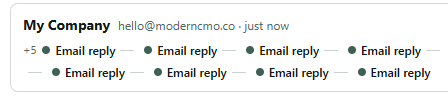
A journey row for one contact: their address, then every email reply in order along a single line, with earlier events folded up behind a +5.
Visit triggers

Follow up on a return visit

Page goals and visit triggers require a one-line snippet on your website. Conversations, bookings and manually marking a deal won work without it.

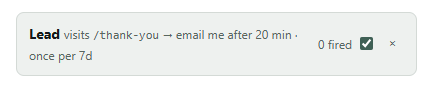
A saved visit trigger: when a lead visits /thank-you, email me after 20 minutes, once per 7 days, with a fired count and an on switch.

Bold Agent Kit vs Relevance AI, side by side

What each one offers for the job this page is about: answering customers, booking them in and following them up. The middle column is what Relevance AI's own website and documentation describe; the right-hand column is Bold Agent Kit.

The jobRelevance AIBold Agent Kit
What it isA platform for building specialist AI agents and multi-agent workforces, designed by your own teamA ready-made sales and service agent, set up from a knowledge base and instructions
Who it is forEnterprise teams in sales, customer success, marketing, HR and operationsBusinesses and agencies answering customers on the channels they already use
Setting up an agentComposed on a visual canvas from agents, tools, knowledge and approvals, started by triggers, webhooks or cronDocuments, Q&A pairs, data points, your pages and instructions; channels switched on one by one
Customer channelsGmail, Slack, phone and other messaging platforms through its integrations; phone agents on a Relevance AI or Twilio numberEmail, texts on nine carriers, calls on Twilio, a website chat widget and eleven DM platforms, built in
IntegrationsMore than 2,000, including Salesforce, HubSpot, Gmail, Slack, Zendesk and CalendlyEighteen CRMs, calendars and stores, including HubSpot, GoHighLevel, Jobber, ServiceTitan and Shopify
Booking appointmentsA meeting scheduler among its example agents, with calendar integrations such as Google Calendar and CalendlyReal open slots from one of eight calendars offered to the customer, and the chosen one written in
How it chargesActions, counted each time an agent runs a tool, plus Vendor Credits; Enterprise arranged through sales$25 a month or $200 a year for the account; unlimited agents; nothing counted per action, message or seat
Your own AI keysAvailable on paid plans, to bypass Vendor CreditsAlways: sixteen providers, or any OpenAI-compatible endpoint you host, billed by them at cost

Relevance AI is a platform for designing agents across a large organisation, and it can be made to do far more kinds of work than Bold Agent Kit does, across far more systems. It bills in Actions and Vendor Credits, with an own-keys option on paid plans. Bold Agent Kit is one ready-made agent for customer conversations on fifteen channels, at $25 a month or $200 a year for the account, always on your own AI key and your own carrier, both billed at cost. If your team wants to build a workforce, Relevance AI is built for that. If you want the front desk answered and booked this week, Bold Agent Kit is.

We checked Relevance AI’s public website on 11 September 2026 for this comparison. Plans and features change, so check relevanceai.com for the current detail. Relevance AI is a trademark of its owner, and Bold Agent Kit is not affiliated with or endorsed by it.

Where each one fits

Three situations we see often. In one of them Relevance AI is the better answer, and we say so plainly.

A company can run both, side by side, for different jobs. Relevance AI in the revenue team, researching accounts, preparing meeting briefs, logging post-call actions and rolling up the forecast; Bold Agent Kit on the front desk, answering the website chat, the phone line, the texts and the DMs, and booking the people who get in touch. The two are not connected to each other; each does its own job.

If you want to build agents for many parts of a large organisation, Relevance AI is the better fit. A revenue team that wants agents to research and enrich accounts, prepare for meetings, review deals, build proposals and forecast, working with systems such as Salesforce, Gong and Snowflake and across more than 2,000 integrations, with a team to design and own them, is buying something Bold Agent Kit does not try to be.

It books your calendar, updates your CRM and knows what they bought

Connect the tools you already run and the agent works them like an assistant would: it takes appointments straight into your calendar, writes notes and outcomes back to the CRM, and reads your store to see what somebody has bought before it answers them.

Bookings are real, not guesses. It is only ever given slots that are genuinely free, and it can only take one it actually offered — so it cannot invent a time or double-book you. The same connection pulls a segment of past customers into a list when you want to run a campaign at them.

It books the slot itselfReal open times offered, and only a slot it actually offered can be booked.
Eighteen toolsHubSpot, GoHighLevel, Housecall Pro, ServiceTitan, Jobber, Stripe, Shopify and more.
It reads the customer firstWhat they bought, what is still open and what they are worth, before it replies.
Pull a segment into a listTake past customers straight out of the CRM and run a campaign at them.
Every action loggedBookings, cancellations and notes all recorded against that contact.

Eighteen CRMs, calendars and stores

  • HubSpot
  • GoHighLevel
  • Housecall Pro
  • ServiceTitan
  • Jobber
  • Google Calendar
  • Microsoft 365
  • Calendly
  • HubSpot Meetings
  • Zoho Bookings
  • Acuity
  • Cal.com
  • Square
  • Stripe
  • Shopify
  • WooCommerce
  • Wix
  • Squarespace

Powered by your own keys

Each agent uses a model on your own API key, in the same way it sends from your own mailbox and your own phone number. Sixteen providers are supported: OpenAI, Anthropic, Gemini, xAI and Mistral; DeepSeek, GLM, Kimi, Qwen and MiniMax; Groq, Together, Fireworks and OpenRouter; and Ollama or any other OpenAI-compatible endpoint you host yourself.

Bring your own credentials and you own the whole stack: your model provider, your mailboxes, your carrier, your CRM. We charge for the software and nothing else — no token markup, no metering, no credit packs — so your provider bills you direct at their rates, usually a few dollars a month per agent.

Your key, sixteen providersOpenAI, Anthropic, Gemini, xAI, Mistral, DeepSeek, Groq, OpenRouter and more.
Or a model you hostOllama, vLLM, or any other OpenAI-compatible endpoint of your own.
The fast model on callsIt switches automatically, because a phone call cannot wait for a sentence.
No metering from usNo markup, no credit packs, no per-message billing. A busy month costs no more.
Keys stored encryptedYour credentials are yours; we never send them anywhere but your provider.

Sixteen model providers, on your own key

  • OpenAI
  • Anthropic
  • Gemini
  • xAI
  • Mistral
  • DeepSeek
  • GLM
  • Kimi
  • Qwen
  • MiniMax
  • Groq
  • Together
  • Fireworks
  • OpenRouter
  • Ollama
  • Any OpenAI API

None of it matters if the email lands in spam

A new address sending forty cold emails a day gets filtered, and takes the domain with it. Mailboxes that opt into warm-up send each other ordinary mail on a ramp, starting at five a day. The receiving mailbox finds each message, moves it out of spam if it landed there, marks it read and replies to a share of them.

Each mailbox carries a health score out of 100 — SPF, DKIM and DMARC on the sending domain, seven days of real sends and bounces, and where its own warm-up mail is landing — with the reasons listed. A mailbox whose bounce rate or spam placement passes a threshold is pulled out of campaign rotation automatically, before it damages the domain.

Warm-up on a rampOpted-in mailboxes send each other ordinary mail, starting at five a day.
A health score out of 100SPF, DKIM and DMARC, seven days of real sends, and where the mail is landing.
A failing address rests itselfCross the bounce or spam threshold and it leaves campaign rotation on its own.
One-click unsubscribeHonoured automatically, including on messages already sitting in the queue.
Caps you cannot overshootOne reply per thread, a daily cap per sender, hourly caps per channel.

From Relevance AI to a ready-made agent in an afternoon

Three steps. Nothing is imported from Relevance AI; what you designed moves across as a knowledge base and instructions. Auto-reply is a separate switch per channel, so the agent answers nothing until you turn a channel on.

Turn your agent's prompts and knowledge into one knowledge base

Name the agent, choose a model and paste your API key, the same provider key you may already use elsewhere. Then give it what a customer needs: your documents, your prices, hours and lead times as data points, and your answers to the questions customers actually ask as Q&A pairs. The knowledge you linked to an agent on Relevance AI is usually the right starting material; bring the documents across and upload them as PDF or Word.

Add the pages of your own site the agent may link to, and write the instructions last: how it should talk, which offer it may make, whether it should always ask for the booking, and the situations in which it should stop and fetch a person. The approval steps you designed on a canvas become a plain rule: these conversations come to us.

Model16 providers, on your own key
Documentsthe knowledge you already had, PDF or Word
Q&A pairsyour answers to the questions you hear
Data pointsprices, hours, lead times
Your pagesread, stored, linked verbatim
Instructionstone, the offer, when to hand over

Connect the channels, instead of designing them

Put the chat snippet on your website, connect the social accounts your customers message, add the mailbox they write to and the number they call. Each runs on your own account, so the reply comes from you and the reputation stays yours. If you already hold a Twilio account, the agent can answer and dial on your number there.

Then connect the calendar so it can book, and the CRM or store so it knows who it is talking to before it answers. Contacts for a campaign come in as a CSV or a segment pulled from the connected CRM.

Websiteone line of script, in your colour
Socialeleven platforms, your own app credentials
Mailboxapp password, or SMTP + IMAP
Numberone of nine SMS carriers; Twilio for calls
Calendareight to choose from
CRM or storeHubSpot, GoHighLevel, Shopify and more

Switch a channel on, and watch one inbox

Switch auto-reply on for the channels you want answered. Calls have separate switches for answering and dialling, so the agent can pick up without ever placing a call. From then on every genuine incoming message on those channels is answered from the knowledge base, once per thread, inside the daily and hourly caps.

Watch the inbox for the threads your instructions send to a person. Put the leads who went quiet on a short campaign, which shows its whole plan before it sends and stops the moment they reply, book or opt out. If Relevance AI still runs your internal agents, it carries on as before.

Auto-replya separate switch per channel
Callsanswering and dialling switched separately
Capsone reply per thread, daily and hourly
Hand overthe conversations you named come to you
Follow-upa campaign, drafted and reviewed first
Stop rulesa reply, a booking or an opt-out

One account, unlimited agents

One account runs unlimited agents, one per client, and nothing is shared between them. A knowledge base belongs to a single agent, and content from one agent is never used to generate replies for another.

Invite a client by email address and they get their own login, which opens onto the one agent you gave them: its conversations, its numbers, its analytics and a reply box. They cannot see your other clients, your API keys, your settings or your billing. Access is deny-by-default.

One agent per clientUnlimited agents on one account, and nothing crosses between them.
They see one agent, not your accountTheir own login, onto the conversations, numbers and analytics you gave them.
Deny by defaultNo settings, no API keys, no billing, no sight of your other clients.
Reporting they can readThat agent has its own funnel, so the client sees what it actually produced.
$50 a year per referralOr $5 a month on the monthly plan — on every payment, for the life of the account, not just the first.

One plan. Everything in it. Monthly or yearly.

No seat tiers, no credit packs, no per-agent or per-channel pricing, and nothing held back behind an enterprise call.

Agents
How manyUnlimited — one per business, brand or job
Shared brainThe same identity, instructions and knowledge on every channel
Knowledge baseDocuments, Q&A pairs, data points and pages of your own site
IsolationOne agent's content is never used to reply for another
Client seatsInvite a client into one agent, with their own login
Channels
EmailAs many mailboxes per agent as you connect, rotated by campaigns
Text messagesNine providers — Twilio, Telnyx, SimpleTexting, Plivo, Vonage, Sinch, Bandwidth, MessageBird, ClickSend
Phone callsAnswering and dialling, with recordings and transcripts
TranscriptionGoogle, or Deepgram nova-3 on your own key
VoicesGoogle, Amazon Polly and ElevenLabs, or your own ElevenLabs / Fish Audio account
Voice cloningRecord a voice in the browser and clone it on your ElevenLabs or Fish Audio key
Website chatA widget on your site with your colour, image and greeting
Social DMsMessenger, Instagram, WhatsApp, Telegram, LINE, Viber, Slack, Discord, Bluesky, Reddit, X
Inbox
One listEvery channel's conversations together, newest first, tagged by channel
FiltersBy channel, by mailbox or number, or by agent
TakeoverReply yourself and the agent stands down on that thread
Hand backReturn the thread to the agent when you are done
Campaigns
Multichannel sequencesEmail, text and call steps in one campaign, each with its own timing
Send conditionsSend a step only if they opened, did not open, clicked or did not click
ScheduleThe days, hours and time zone anything may be sent
Stop rulesA reply, a booking or an opt-out on any channel ends the sequence
PacingPer-mailbox and per-number hourly limits, pausable and resumable
Review before startThe full plan is shown; a campaign sends nothing until you start it
TemplatesEmail, text and call scripts, saved once and reused
Analytics
FunnelReached, replied, visited, converted, plus value won and time to convert
By channelWhere each person started, and the channel they converted on
PagesWhich pages known people read, and how many of them converted
JourneysOne row per person: every message, visit, call and booking in order
GoalsA page rule or a manual "won", each with a dollar value
TriggersA known person returns to a page — notify you, or send a follow-up
Open and click trackingRecorded per campaign and added to that person's history
Integrations
CalendarsGoogle, Microsoft 365, Calendly, Cal.com, Acuity, Zoho, Square, HubSpot Meetings
CRMs and commerceHubSpot, GoHighLevel, Housecall Pro, ServiceTitan, Jobber, Stripe, Shopify, WooCommerce, Wix, Squarespace
BookingReal open slots offered, and only an offered slot can be booked
CRM importImport a segment of customers into a contact list
Deliverability and compliance
Mailbox warm-upRamped sending across the network, with spam rescue and replies
Health scoreSPF, DKIM, DMARC, bounce rate and inbox placement, with reasons
Auto-restA failing address is removed from rotation automatically
UnsubscribesOne click, honoured automatically, including on queued mail
Reply limitsOne reply per thread, per-sender daily and per-channel hourly caps
FilteringBounces, out-of-office and no-reply addresses ignored
List building
Contact extractionEmails, phone numbers and social profiles, on any site. Unlimited.
Deep scanFollows the pages of a domain most likely to carry contact details
Domain queueLoad a CSV of sites and work through them one at a time
Contacts and listsUnlimited, by email or phone, with CSV import and export
AI
Your own keySixteen providers, including any OpenAI-compatible endpoint you host
What we charge for AINothing — no markup, no metering, no credit packs
On callsUses your provider's fastest model automatically
Account
PlatformsChrome side panel and web dashboard on one login
Members' forumSix boards, visible only once you are signed in
Referral program$50 a year per referral ($5 a month), recurring for the life of the account
Supportsupport@boldagents.co
$25/ month
$200/ year

Billed monthly. No add-ons, no seat tiers. Cancel anytime.

$16.67 a month, billed once a year. No add-ons, no seat tiers. Cancel anytime.

Start 7-day free trial Start 7-day free trial

Before you sign up

Is Bold Agent Kit better than Relevance AI?

For some buyers, and not for others. An enterprise that wants to design many agents for many processes, such as research, forecasting, deal review and proposals, across a large catalogue of integrations and with a team to own them, will find Relevance AI built for that, and Bold Agent Kit is not. A small business, clinic, trades company or agency that wants its customers answered on email, text, phone, website chat and DMs, booked into real slots and followed up, without designing anything, will find Bold Agent Kit built for exactly that, at $25 a month for the account.

What is the difference between Bold Agent Kit and Relevance AI?

Relevance AI is a platform on which your team builds specialist AI agents and multi-agent workforces on a visual canvas, connected to more than 2,000 integrations and billed in Actions and Vendor Credits. Bold Agent Kit is one ready-made sales and service agent: you give it a knowledge base and instructions, connect the channels your customers use, and it answers, books real calendar slots and follows up on fifteen channels, for $25 a month for the account. One is a platform for building many kinds of agent; the other is a finished agent for one job.

How does Bold Agent Kit pricing compare with Relevance AI pricing?

Relevance AI bills in Actions, counted each time an agent runs a tool, and in Vendor Credits for model and tool usage, which you can bypass by bringing your own API keys. Its pricing page presents an Enterprise plan arranged through sales, and its documentation lists self-serve plans with monthly allowances. Bold Agent Kit is $25 a month or $200 a year for the whole account, with a 7-day free trial, unlimited agents and nothing counted per action, message or seat. The AI runs on your own key at your provider's rates, and texts and calls on your own carrier account.

Can I move my Relevance AI agents across to Bold Agent Kit?

Not by import. The two are not connected, and agents, tools and workforces do not convert automatically. What moves is the substance: your documents upload as PDF or Word, your answers to common questions become Q&A pairs, your prices and hours become data points, and your prompts and approval rules become the agent's instructions, including which conversations come to a person. Contacts come in as a CSV or a segment from a connected CRM such as HubSpot. An agent can be answering on its first channel the same afternoon, and Relevance AI can carry on running your internal agents.

When is Relevance AI the better choice?

When you want to build agents for many parts of a large organisation, rather than switch on one for customer conversations. Revenue teams that want agents to research and enrich accounts, prepare for meetings, act on calls, review deals, draft proposals and roll up forecasts, connected to systems such as Salesforce, Gong and Snowflake and designed by their own people, are the audience its site speaks to. It is also the better choice if you want full control over each agent's tools, triggers and approval steps. Bold Agent Kit does one job, and does not try to be a platform.

Both let me use my own AI key. What is actually different?

The key works the same way in both: your provider bills you for the model. The difference is what else is billed. On Relevance AI, bringing your own keys bypasses Vendor Credits, and its documentation still counts an Action each time an agent runs a tool. On Bold Agent Kit, the plan is $25 a month for the account and nothing is counted: no actions, no messages, no seats. Your own key is also the only way it runs, with sixteen providers, including Ollama or any other OpenAI-compatible endpoint you host yourself.

Can Bold Agent Kit make and take phone calls?

Yes, on your own Twilio number, with separate switches for answering and dialling, so it can pick up without ever placing a call. The agent hears and speaks in real time, and switches to your provider's fastest model on a call so there are no silences. It answers from the same knowledge base as every other channel, offers real open slots and books the one the caller picks. Transcription comes from Google or Deepgram, and the voice from Google, Amazon Polly or ElevenLabs, or your own ElevenLabs or Fish Audio account. Recordings and transcripts land in the inbox.

Can I run agents for several clients on one account?

Yes. The one plan includes unlimited agents, so an agency builds one per client, each with its own mailbox, number, widget, calendar and knowledge base. A knowledge base belongs to one agent only, and content from one agent is never used to reply for another. Invite a client by email address and they get their own login onto the one agent you gave them: its conversations, numbers, analytics and a reply box. They cannot see your other clients, your API keys, your settings or your billing. The price stays $25 a month however many clients you add.

Other comparisons

How Bold Agent Kit compares with the other tools people shortlist for the same job.

Your front desk, answered this week.

No canvas, no Actions to forecast. Build one agent from your material, connect one channel, and see how it answers, books and follows up the people who contact your business. $25 a month for the account, with a 7-day free trial.

7-day free trial · Cancel anytime